
The 0.6-second truth every rider in denim should know
A Paramedic Told Him His Jeans "Bought Him Half a Second." Here's the 0.6-Second Truth Every Rider in Denim Needs to Hear.
It isn't the speed that takes your skin off. It's the fabric — and most riders are wearing the wrong one without knowing it. We dug into the abrasion science (and the $69 cargos quietly changing it).

I have cut the pants off more motorcyclists than I can count. Nine years on a trauma unit will do that. And if you let me tell you one thing before you next throw a leg over your bike in your normal jeans, let it be this: I have never once had to cut off a pair of proper riding pants and find nothing underneath but healthy skin — until the year the cheap certified ones started turning up. That's the whole story, really. But you should hear the long version, because it changed how I think about a pair of $69 pants.
My name isn't important. What's important is the room. It's 2 a.m., the resus bay is cold on purpose, and the paramedics wheel in a rider who "only came off at a roundabout." Everyone pictures motorway carnage when they think motorbike crash. The reality that comes through my doors is almost always slower, dumber, closer to home. Twenty miles an hour. A wet drain cover. A car that pulled out. The bike slides one way, the rider slides the other, and the tarmac starts doing the one thing tarmac does to a moving human body: it grinds.
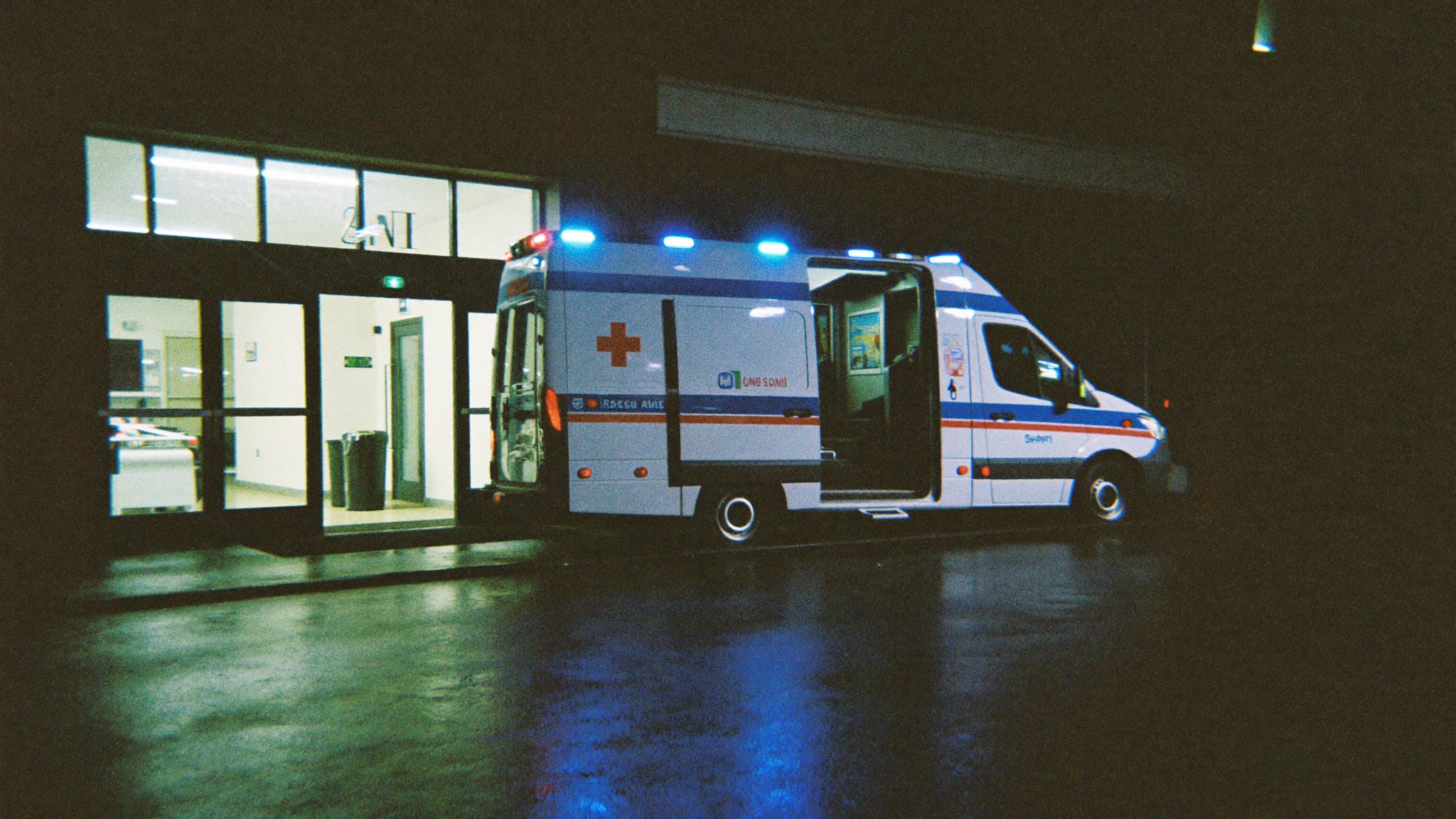
The one I still think about
He was twenty-two. Came off at maybe twenty-five on a Tuesday, on his way to a shift he was already late for. Not a squid, not a speeder — a normal lad in normal jeans. By the time he reached me the denim on his left leg had simply stopped existing. Not torn. Gone. The paramedics hadn't needed scissors on that side; the road had already done the cutting.
What was left underneath is the part I won't describe in detail, because you don't need the nightmare — you need the mechanism. He spent the next several weeks having dressings changed daily. Then the grafts. Skin taken from his thigh to patch the parts of his leg the road had taken first. He kept saying the same thing, over and over, in that flat, embarrassed voice they all use: "I was only going to work."
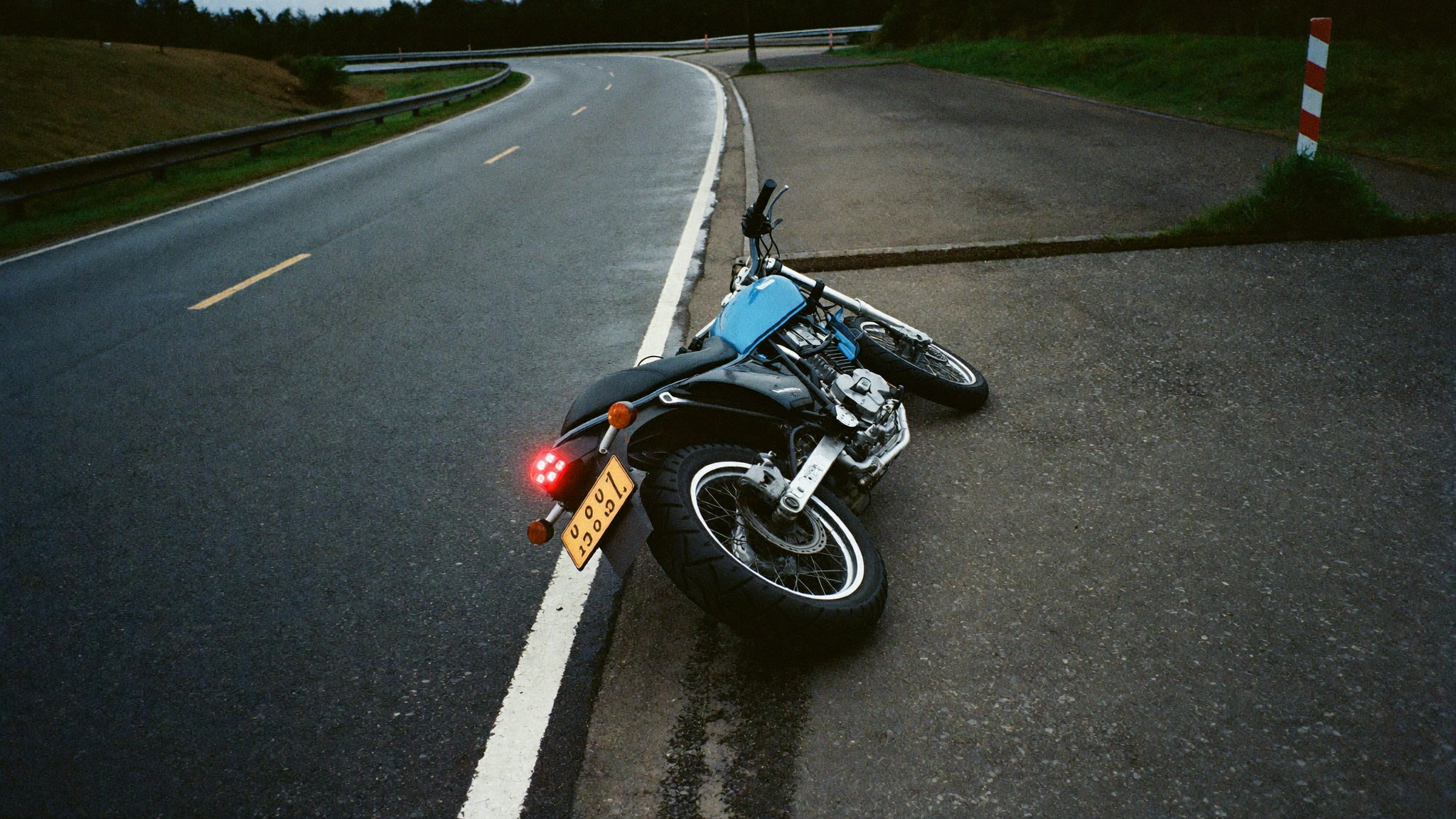
What actually happens in a crash (it isn't what you think)
Here is the thing nobody explains when you pass your test. In a low-speed off, the impact rarely kills you. It's the slide that does the damage — the friction of skin dragging across abrasive tarmac. And the only thing standing between your skin and that road is a few millimeters of fabric. Not your reflexes. Not your experience. Not how careful you are. Fabric.
Ordinary denim was never woven to resist abrasion. It was woven to look good in a pub. So when it meets tarmac at any speed at all, it doesn't heroically tear — it disappears, and your skin becomes the next layer in line. I have watched the consequences of that sentence for nine years.
Read those two numbers again, because they are the entire argument. 0.6 seconds versus 7. In a slide, seconds are everything — they are the difference between a graze you forget by Friday and a graft you carry for life. It is not a small upgrade. It is a different category of outcome.
| What you're actually wearing | Seconds on tarmac* | What it means in a slide |
|---|---|---|
| Standard fashion denim | 0.6 s | Tears through almost instantly — skin meets road |
| "Moto-look" jeans, no CE rating | ~1–2 s | Looks the part, fails the slide |
| Bastion — CE EN 17092 Class AA | 7 s | Built for real city & A-road speeds (~40 mph) |
*Abrasion-rig comparison, figures drawn from independent rider-gear testing.
The sentence I hear on every single one of them
"It was only a short ride." I could write it on the wall of the bay. The riders who arrive in the worst state are almost never the ones who were doing something reckless. They're the commuters. The ones nipping to the shop. The returning riders who bought a sensible bike at forty and pull on whatever's already in the wardrobe because it's "just ten minutes down the road." The short, familiar, boring rides — that's where the slide waits, precisely because that's the ride nobody gears up for.
And I understood why, because I'd have made the same call. Who wants to pull on a full leather race suit to fetch milk? Who wants to walk into an office looking like they've come off a track? So they don't. They wear the jeans. They cross their fingers. And most days, most of them, they get away with it. That's the trap — the getting-away-with-it. It teaches you the wrong lesson right up until the one morning it doesn't.
EN 17092 is not marketing language. It is the European protective standard for motorcycle clothing that replaced the old EN 13595. "AA" means the garment survived a defined abrasion, tear and seam-strength test, with impact armor at the knees and hips. A pair of jeans with a "CE" tag sewn in and no certificate number behind it has passed nothing at all. I learned to ask riders what they'd been wearing. The answers taught me everything.
Then I started noticing the ones who walked away
Because there were some. Not many, at first — but a growing few who came off at the same stupid speeds, on the same wet roundabouts, and got up. Bruised. Shaken. Furious at their bike. But intact. And when I asked what they'd been wearing, it was never the leathers. It was, almost every time, a pair of pants that looked completely ordinary — cargos, jeans, nothing you'd clock as bike gear — that turned out to be certified underneath.
One of them, a courier in his thirties, actually laughed about it from the trolley. Said his mates took the mick because his "bike pants" looked like something he'd wear to Tesco. Then he'd gone down at thirty on a diesel spill and stood up with a bruised hip and a scuff. He pulled the fabric round to show me the knee — scuffed grey, but whole. "Held," he said. That word again, but the good version of it this time.
Why the good gear almost never makes it onto the rider
This is the bit that took me years to properly understand, and it's the bit that matters most. The gear that protects you has always existed. Full leathers, armored kit — brilliant, and almost nobody wears it for the everyday riding where the crashes actually happen. Because it's hot. It's heavy. It's a faff. It looks like a costume when you're standing in a queue. And the proper stuff runs $350 to $550 a pair.
So the real enemy was never ignorance. Riders know jeans don't protect them — they'll tell you so themselves. The enemy is friction of a different kind: the small daily hassle that makes you leave the good gear on the peg. Protection that lives in the wardrobe protects nobody. The only gear that saves a life is the gear a rider will actually put on for the ten-minute ride, every single time, without thinking about it.
Which means the single most important feature of protective gear isn't the armor rating at all. It's whether you'll wear it. And that is exactly the thing the industry got wrong for decades.
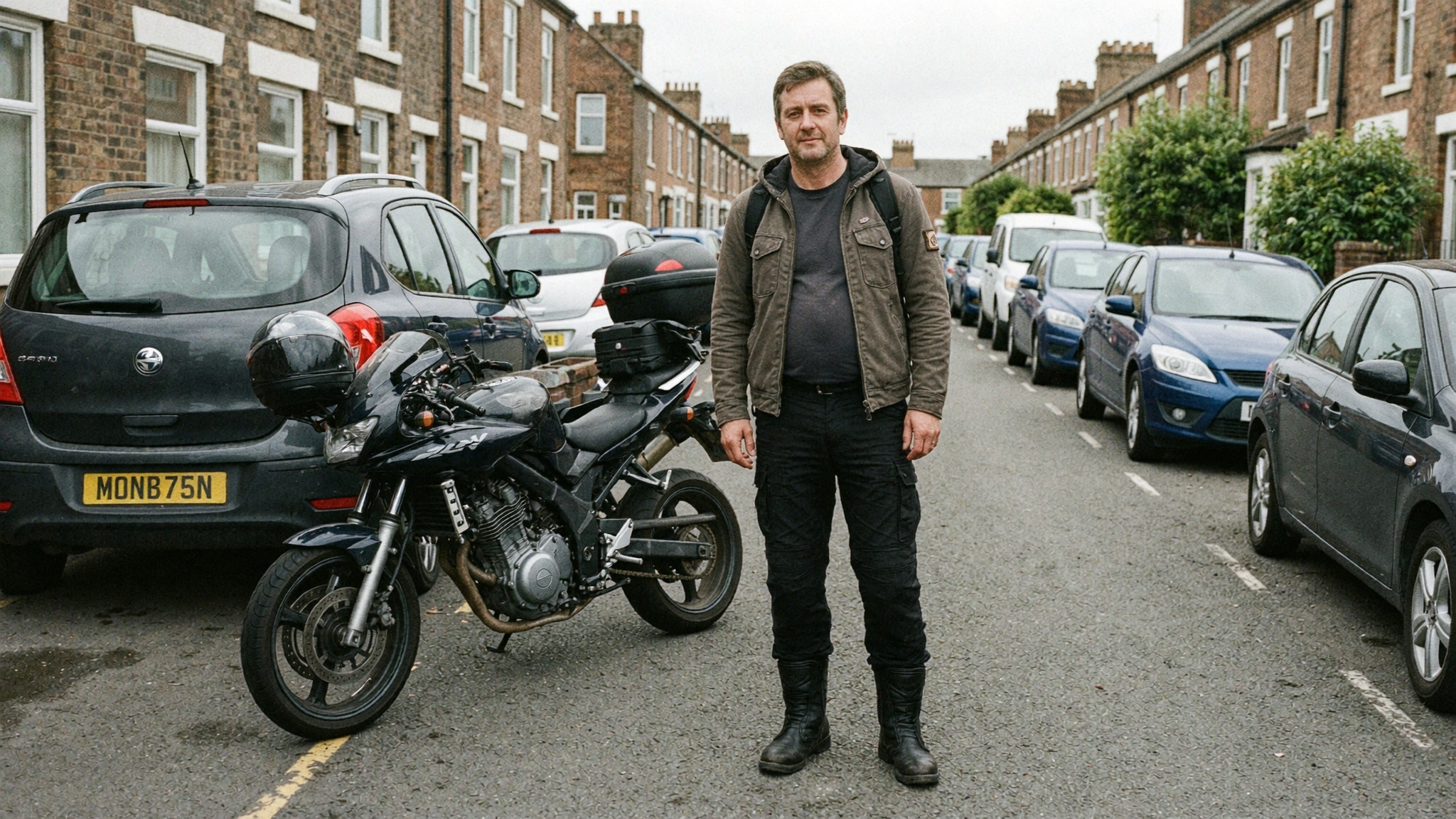
What I tell every rider who'll listen to me now
Get a pair of pants that are genuinely certified — CE EN 17092, Class AA — and that look and feel like normal clothes, so you'll wear them for the boring rides too. That's it. That's the whole prescription. The brand I keep seeing on the riders who walk away, and the one I now point people to, is Bastion. Class AA rated. Cordura at the seat, hips and knees — the first three points that hit the road. CE armor at the knees and hips. Single-layer four-way stretch, so it moves like ordinary pants and doesn't cook you in traffic. And off the bike, it just reads as a cargo.
The first time someone told me the price, I assumed it was a scam. $69.99, when the pairs I'd trusted cost six or seven times that? My instinct was the same as yours probably is right now: too cheap to be real.
So I did what a suspicious nurse does — I checked
The internet is full of "moto denim" with counterfeit Cordura tags and fake CE labels; a lot of it wouldn't survive three seconds on asphalt. So a low price should make you demand proof, not hand over your card. The difference with Bastion is that the proof is published: the EN 17092 Class AA certificate, the test report, and macro photos of exactly where the Cordura sits. The $69.99 isn't the quality — it's a launch price against an RRP of $139.99. The certificate is the quality. Once I'd read it, the suspicion turned into something closer to relief.
Because here, finally, was the thing I'd been wishing existed every 2 a.m. for nine years: real protection, at a price no one could use as an excuse, in a pair of pants a rider would actually wear to the shop.
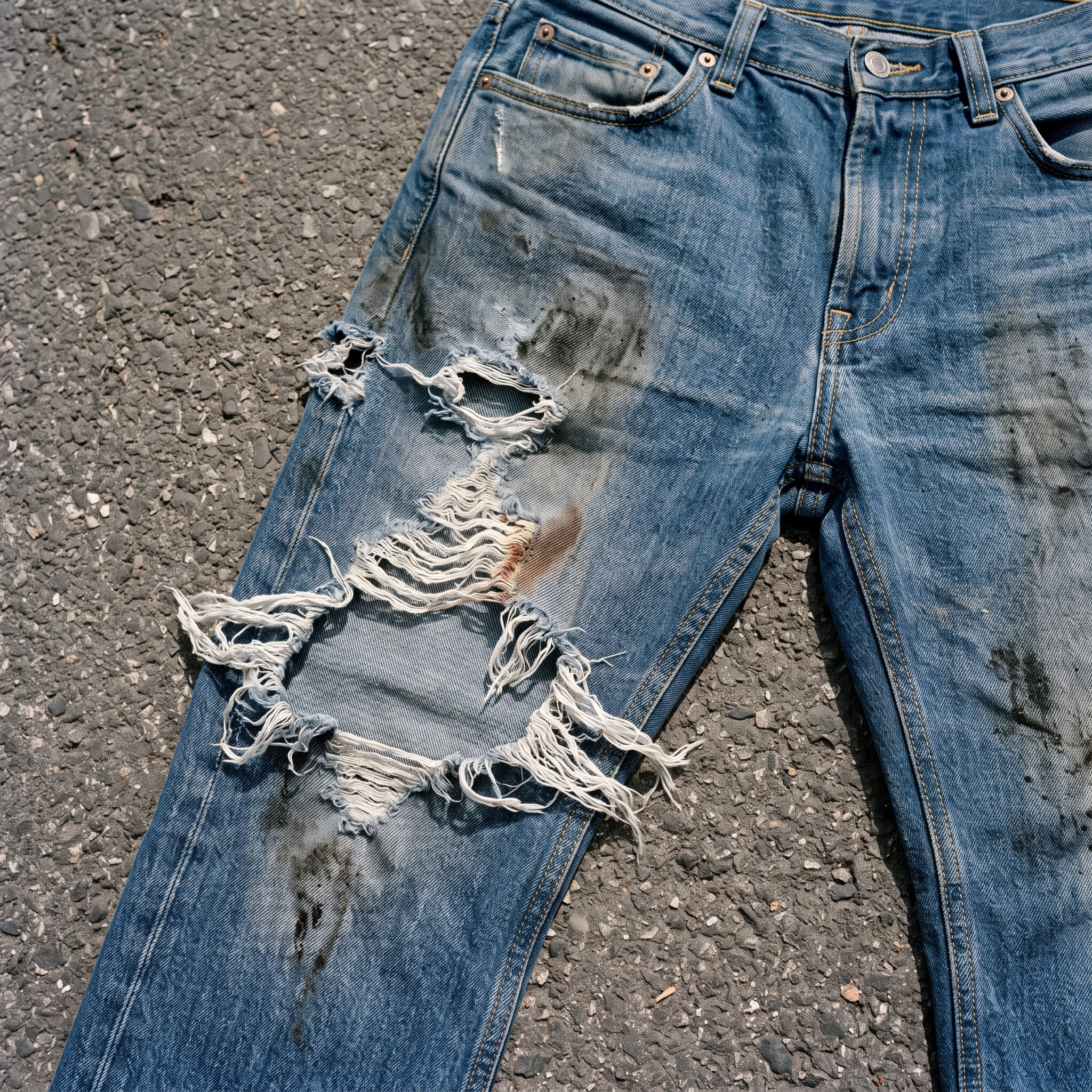
Through to skin in 0.6 s. Binned at the roadside.
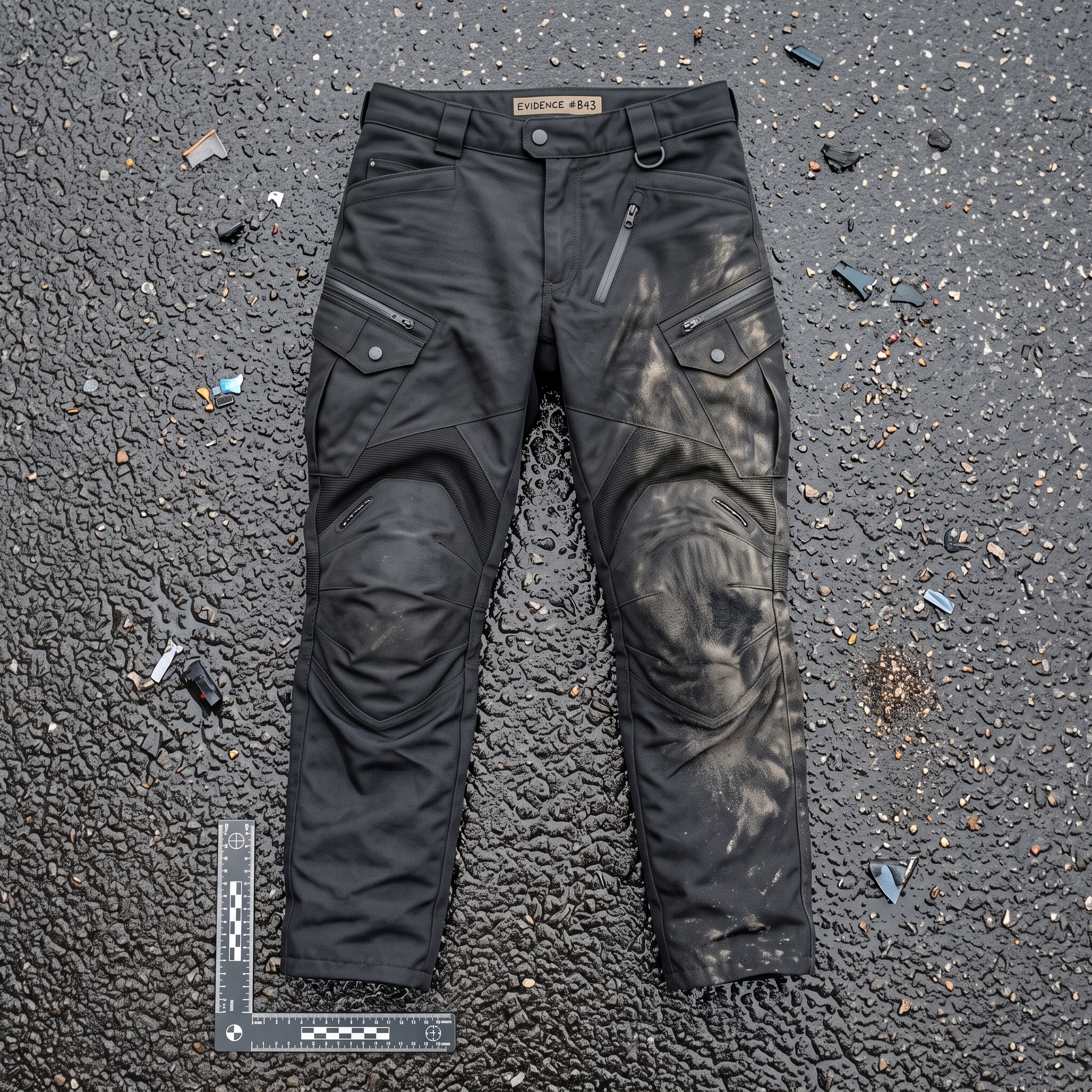
Scuffed. Held. Went back on the bike.
Came off on a wet roundabout at about 25 mph on the way to work. Walked away with a bruise on my hip and a graze on my hand. The cargos scuffed but did not tear. I'm a believer now — I won't ride in anything else.
I emailed before buying and they sent the EN 17092 Class AA certificate and test report over the same day. That is the only reason I trusted it at the price. The kit itself is excellent — feels like a proper slim jean, not a sack.
Bought a pair for my husband who commutes daily. He wears them to the office now and nobody has any idea they are armored. He says they're more comfortable than his actual jeans.
Sizing runs true to a slim-fit jean. I'm 6'1" and the 34" leg was spot on — most "moto jeans" stop at my ankle. Comfortable on a two-hour ride down to the coast. Knocked one star only because I'd love more color options.
"But riding gear is hot, stiff, ugly — and $500."
This is the real reason most riders stay in denim. It isn't that they don't care about their skin. It's that every protective option they've tried felt like a punishment. Hot. Heavy. "A bit sticky." And expensive — the proper AAA stuff runs $350 to $550 a pair. So they make a quiet trade: comfort and looking normal now, in exchange for a risk they hope never comes due.
What changed is the fabric tech. A single-layer, four-way-stretch shell with Cordura at the contact points means a pair that moves like joggers and slides like armor — without the sauna. As one long-term reviewer of the category put it: "in hot weather they stay appreciably cool, and they're just like normal jeans to walk around in."
And the look? That's the part Bastion owners can't stop mentioning:
"Nobody realizes they're not normal jeans unless you tell them."— James, verified rider review
"I don't feel like I'm wearing bike gear, so would definitely recommend."— Sam, verified rider review
You walk into the office looking like yourself. You ride home knowing your knees and hips are covered. No Transformer costume. No changing in the work toilets. No $500.

"$69 for genuine CE AA? That sounds too cheap to be real."
Good instinct — keep it. The internet is full of "moto denim" with fake Cordura tags and counterfeit CE labels (one tester found the tags on an Amazon pair "were all fake"). Half of what's sold as riding gear "wouldn't last three seconds on asphalt." So you should absolutely demand proof before you trust any number on a label.
That's exactly why Bastion publishes the CE EN 17092 Class AA certificate, the test report, and macro photos of the Cordura panels at the knees, hips and seat. The $69.99 isn't the quality — it's a launch price (RRP $139.99). The certificate is the quality.
What's actually in them (and where)
The protection isn't a marketing sticker — it's built into specific zones. Here's the full breakdown of what you're putting on your legs:
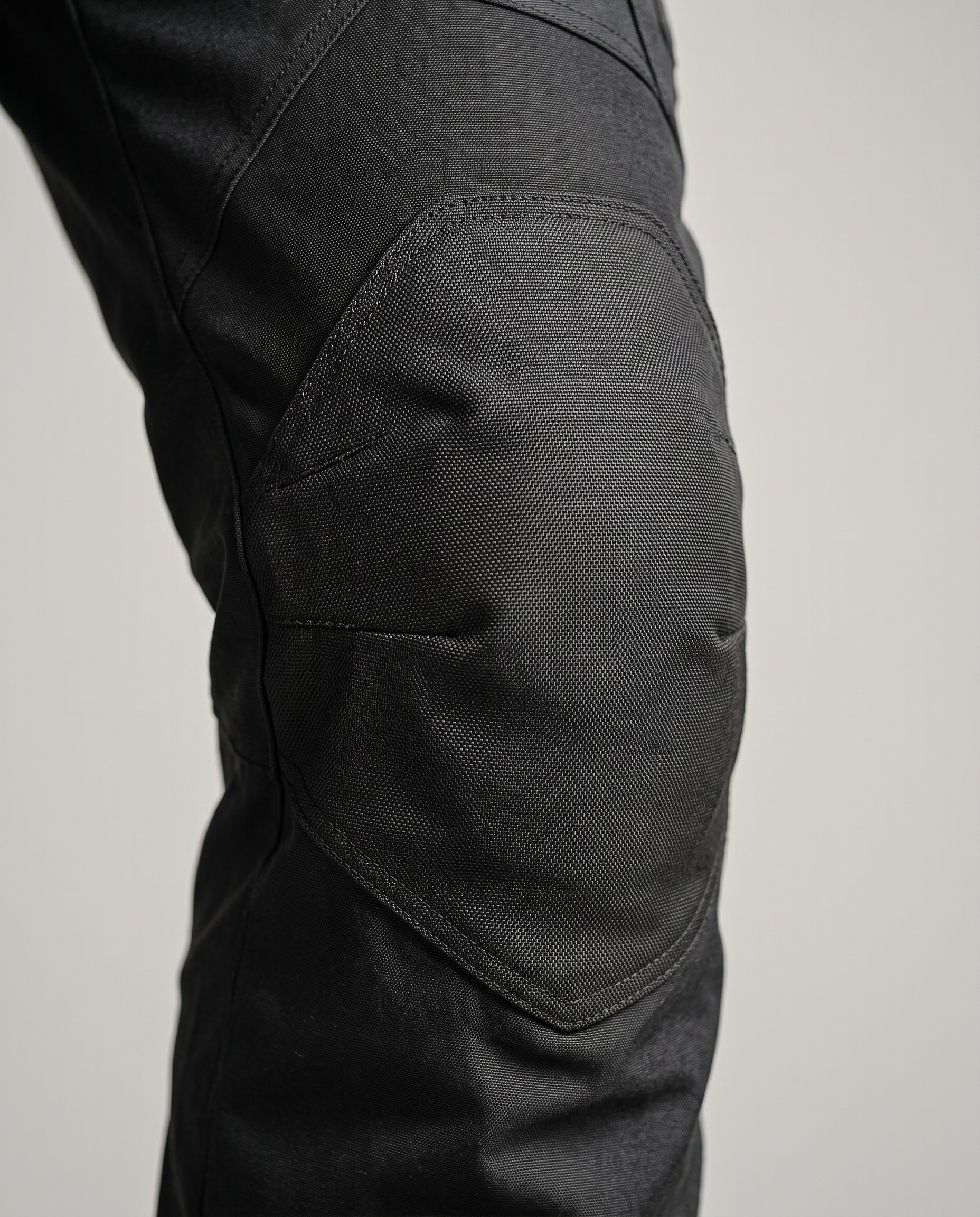
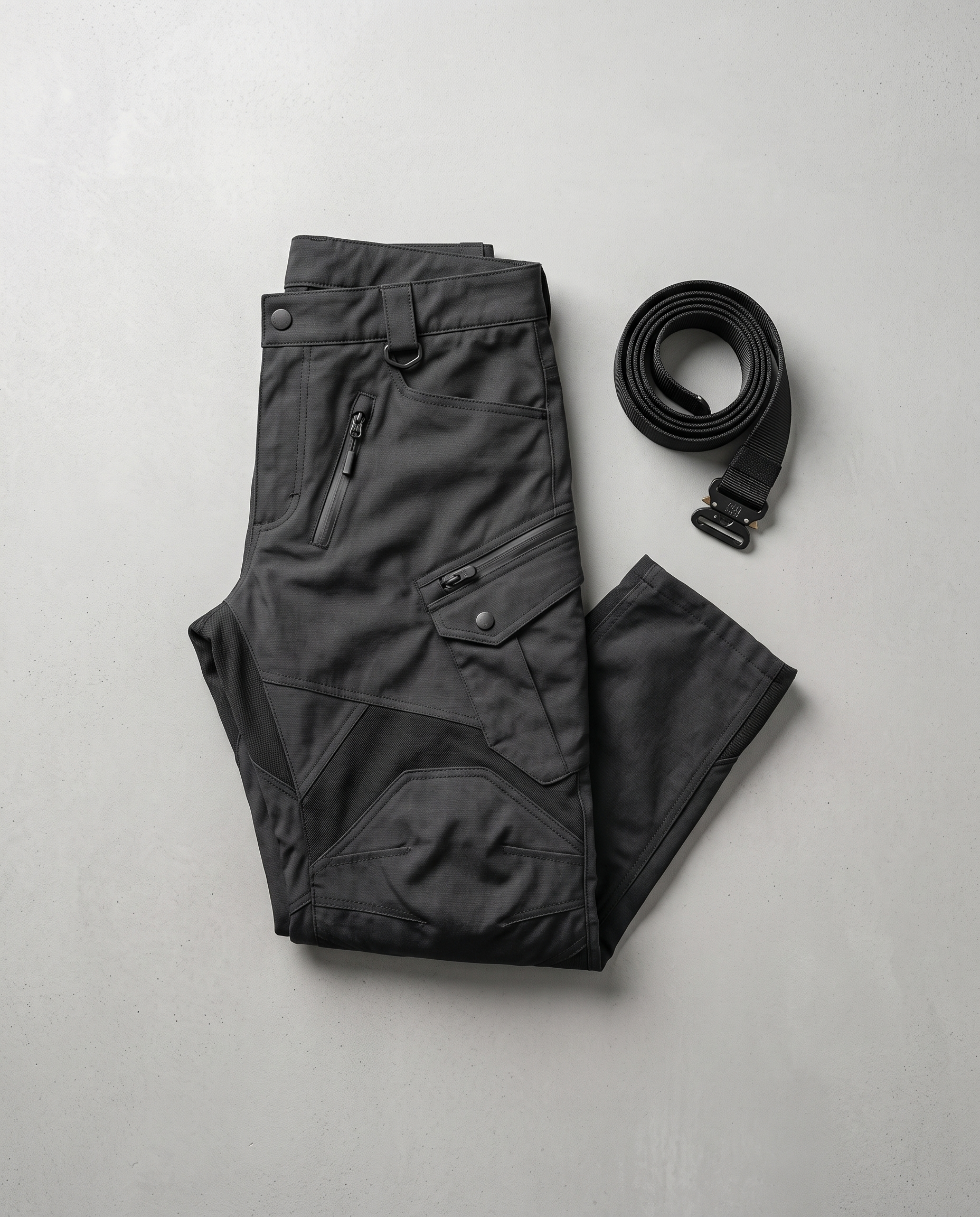
I filter through London traffic every day. They're genuinely cool in summer and don't look like bike gear when I sit down at my desk. The best part is I stopped making excuses not to gear up.
It's looking like my bike might be a write-off, but I'm most definitely not. The knee armor did its job in a high-side. Cannot recommend highly enough.
I don't feel like I'm wearing bike gear, so I actually wear them — which is the whole point. Would recommend to anyone still riding in normal jeans and telling themselves it's fine.
The real reason riders finally switch
It's rarely the spec sheet. It's a moment. A mate who came off. A near-miss at a junction that left their hands shaking. Or the quiet sentence a rider's partner says every single morning — the one Lei's family no longer has to fear:
"I'm just pleased my 3 children still have got a mother they can cuddle and argue with."— Lei, after the crash her riding jeans walked her away from
You don't get to choose whether you go down. Keep riding long enough and, statistically, you will. You only get to choose what you're wearing when it happens. 0.6 seconds, or 7.
Is it really CE certified at this price?
Yes — Class AA to EN 17092. The $69.99 is a launch offer (RRP $139.99); the certificate and full test report are published so you can verify before you buy, not just trust a sewn-in tag.
Will it actually look like normal cargos?
That's the whole point. Verified owners repeatedly say "nobody realizes they're not normal jeans." The CE armor is slim and sits internally at the knee and hip; off the bike they read as everyday tactical cargos.
How do I get the sizing right (I'm tall / bigger build)?
They fit like a slim-tapered jean and run true to size. Inside leg runs 30½″ (XS) to 34½″ (3XL), so tall riders are covered where most "moto jeans" stop short. If you're between sizes, size up — and there's 30-day money-back if the fit isn't right.
Is the armor removable? Can I wash them?
Yes. The CE knee and hip protectors pop out, so you can machine wash the cargos cold and air dry, then slot the armor back in.
Are they hot in summer?
They're a single-layer 4-way-stretch shell — no thick thermal lining — so they stay appreciably cooler than traditional bike pants. Riders commuting through summer traffic specifically mention this.
Waterproof?
Water-repellent, not waterproof. Light rain and road spray bead off; they're not designed for a sustained downpour.
What's the delivery time and is it tracked?
Tracked UK delivery with a tracking number emailed to you. Delivery windows can vary — you'll always have your tracking link.
What if the size is wrong?
30-day money-back, free tactical belt included. Try them, check the fit and the certificate, send them back if they're not right for you.
Why so much cheaper than the $350–$550 pairs?
Those prices are largely brand and retail margin. The protection that matters is the EN 17092 Class AA rating and the Cordura/armor zones — which Bastion certifies. The $69.99 is an introductory launch price to get the cargos on riders' legs.
This is an advertorial. Quotes are real rider verbatims from public reviews and crash accounts. Water-repellent, not waterproof.