
$69 for Class AA armor? I asked to see the certificate
$69 for Genuine CE AA Armor? I Was Sure It Was a Scam — Until I Asked to See the Certificate.
The internet is full of fake "CE" tags and Cordura labels that wouldn't last three seconds on tarmac. So before I bought a $69 pair, I did the homework a suspicious rider should do. Here's exactly what I found.

I buy things for a living. Fifteen years in procurement — my whole job is calling suppliers' bluffs. So when I saw motorcycle cargos advertised as genuine CE Class AA for $69.99, my first thought wasn't "great deal." It was "where's the lie." Because there's almost always a lie. And I decided, for once, to go and find it.
Let me be honest about my starting position: I assumed it was a scam. Not maybe. Definitely. I've spent my career reading the gap between what a spec sheet claims and what a product actually is, and in motorcycle gear that gap is a canyon. A reviewer I trust found the "Cordura" tags that came with an Amazon pair were straight-up counterfeit. Another tester put it bluntly — half the jeans sold as riding gear wouldn't survive three seconds on tarmac. The category is full of "CE" labels stitched into pants that have passed no test at all.
So I did what I'd do at work with any supplier making a claim that good at a price that low. I ordered a single pair — the minimum — and I set out to catch them.
First, the three ways a "CE" claim can be a lie
Before I show you what I found, you need the same tools I use, because once you can name the trick you can't be sold it. There are three common cons, and cheap "moto denim" usually runs at least one.
The phantom certificate. A "CE" logo on a swing tag means nothing on its own. CE is a claim of conformity to a standard — not proof of one. Without the standard number (EN 17092), a test report and a notified body behind it, the letters are decoration. This catches most buyers, because the fake tag looks identical to the real thing.
The token layer. A thin aramid patch the size of a beer mat, sewn behind one knee, lets a brand say "protective" while ninety per cent of the garment is ordinary fabric. In a real slide your hip, your seat and your outer thigh hit first — and on those pairs, they're bare.
The wrong grade, quietly. Some pairs are genuinely tested, but only to the lowest class, then marketed as though that's the same as AA. It isn't. The class is the entire point of the standard — it's the number that tells you how long the fabric holds before the road is through it.
So the real test was never "does it say CE." It's three questions: show me the certificate, show me the report, and show me where the protective fabric actually sits. I put all three to this $69 pair. Here's what happened.
Test one — the paperwork, before anything else
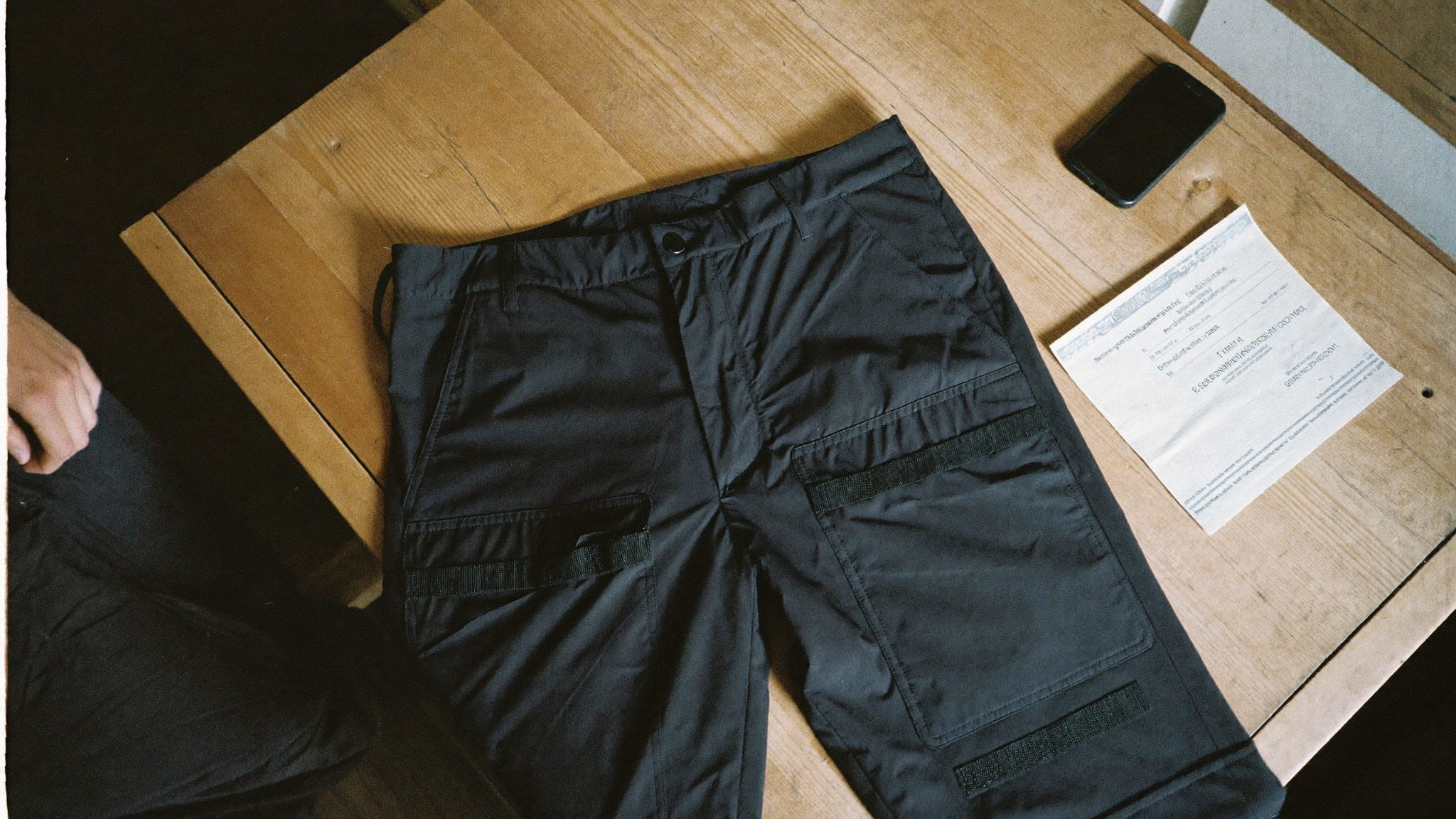
The pants arrived in three days, tracked, which I noted. I didn't try them on. I put them on the table next to my laptop and went looking for the certificate first, the way I'd vet any supplier's compliance docs — hunting for the weasel words: "self-declared," a missing test house, a standard quoted without a class.
Bastion publishes it. EN 17092, Class AA, with the test report. I read it properly, because reading compliance documents is literally my job, and it held up. That was the first time my certainty wobbled. I had fully expected a dead end here — a "CE" tag and nothing behind it. Instead there was a document with a number, a class and a body behind it. Annoying, frankly. I'd wanted to catch them on the easy one.
Test two — turn them inside out
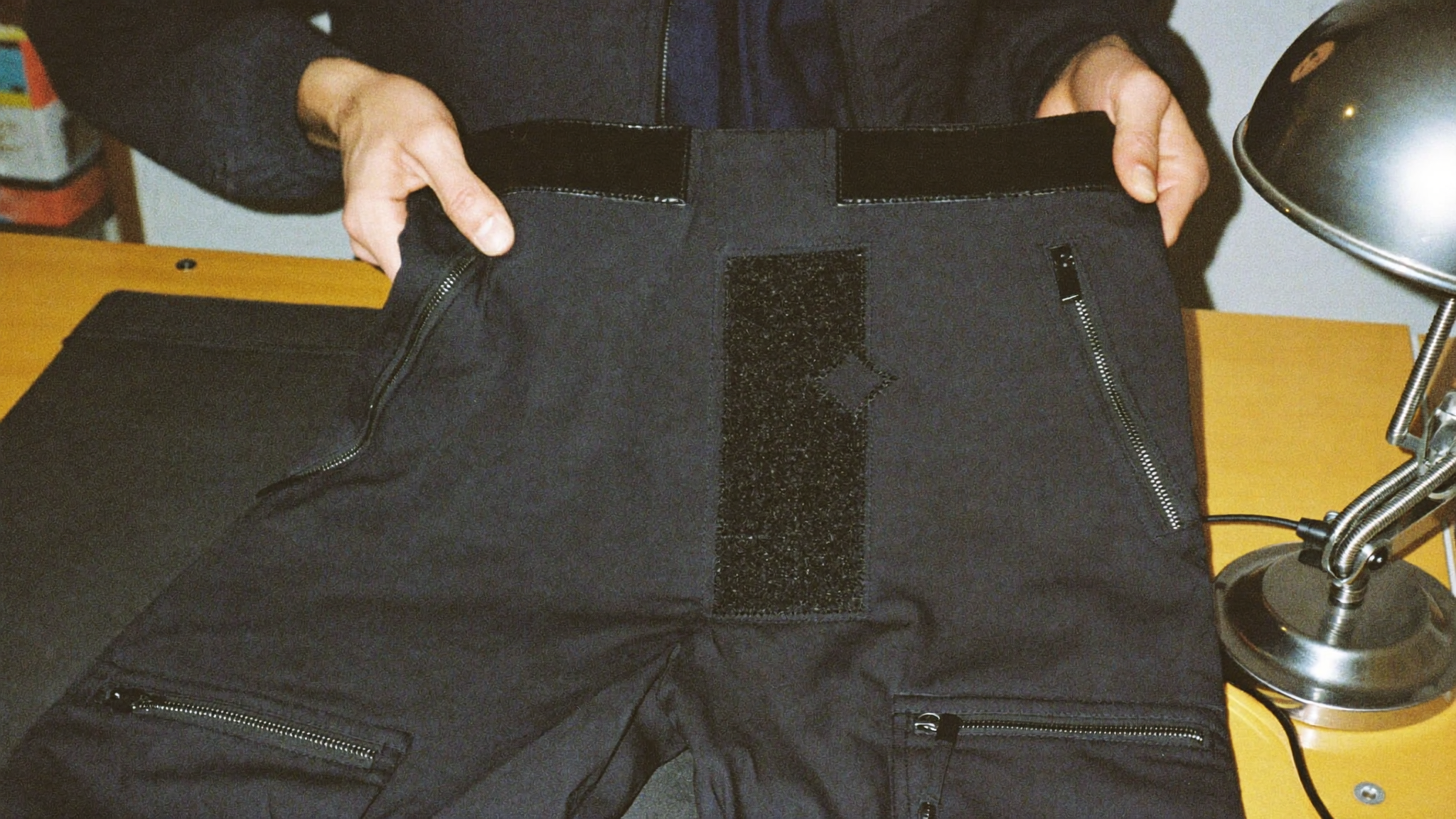
The oldest trick in the category is the token layer, so the second test is physical: where is the protective fabric, really? I turned them inside out under the desk lamp and went looking for the trick. Cordura reinforcement at the knees, the hips and the seat — the three points that actually make contact and then slide. CE armor in slim internal pockets at the knees and hips. Not a beer-mat patch behind one knee. The real zones, reinforced.
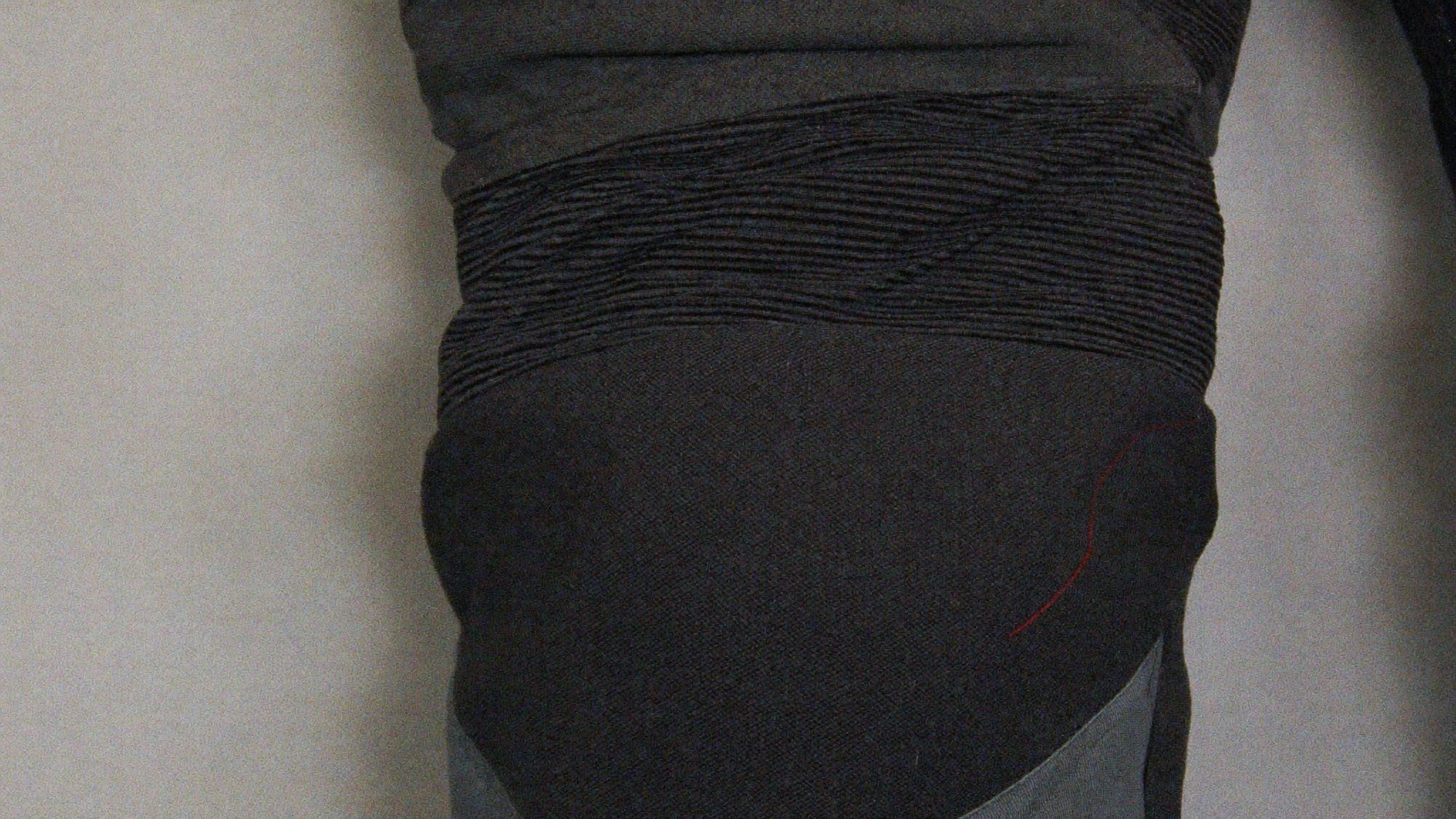
That mattered to me more than the certificate, honestly, because a rating is only as good as where the fabric sits. A garment can be "Class AA" in a lab and still open up at the hip if the reinforcement stops at the back pocket. This didn't. The dense fabric was exactly where a body meets a road.
And this is the point where I stopped hunting for the lie and started understanding the mechanism — the thing the whole product is really about.
0.6 seconds versus seven. That gap is the entire reason the grade exists. It isn't marketing — it's the difference between a scrape you forget by Friday and a skin graft that takes a theatre and months. And it's decided in the first heartbeat of a slide, at any speed, which is why "I only ride slowly" was never the safety plan people think it is.
Test three — do riders who've actually hit the road back it up?
Specs are one thing; riders who've been down are another, and they don't talk about looks — they talk about ambulances. The verbatims that stopped me were the crash accounts. "The ambulance driver had to cut all the gear off and even they were amazed how well made my clothing was." "My bike might be a write-off, but I'm most definitely not." That's not a review of a product. That's a person telling you the fabric did the one job that matters.
So why is it $69 and not $500? (the question that started all this)
This was my last suspicion, and the one I dug hardest into, because a price that far below market usually means a hidden compromise and my whole job is finding hidden compromises. There wasn't one on the grade. Two honest things explain the price.
First, the $69.99 is an introductory launch price — the RRP is $139.99, and it returns there once launch stock clears. Second, and this is the part the premium market would rather you didn't work out: a great deal of what you pay at $350–$550 is a race-heritage badge and an AAA over-spec built for sustained track speeds. For real-world road riding — commuting, A-roads, up to around forty — Class AA is precisely the grade the standard specifies. You are not getting less protection for your riding. You are declining to pay a four-hundred-pound premium for a scenario that is not yours.
That reframed the whole exercise for me. I hadn't found a cheap product pretending to be a good one. I'd found a properly certified product priced without the luxury tax — and a market that had trained me to assume real protection has to hurt the wallet to be real.
The honest catch (a suspicious buyer deserves one)
I don't trust anything without a catch, so here's the honest one. They're water-repellent, not waterproof — they'll shrug off a shower and road spray, but they are not wet-weather over-pants. And they are Class AA, not AAA. If you're a track regular pinning three figures down a straight, buy the leathers; that is genuinely your kit and I won't pretend otherwise. For everyone else doing normal road miles, AA is the right answer, and the honest one.
There's a particular type of rider I'd point at this hardest, because I've become one: the experienced one. The rider with decades in who's quietly decided the rules don't apply to them anymore, and rides in whatever's in the wardrobe. I spoke to a man who'd gone thirty-one years without a spill and treated that as proof of skill — until a wet roundabout at twenty miles an hour took the lot in a second and a half. His lesson wasn't "ride more carefully." It was that he'd spent three decades being protected by luck and calling it competence. He does the same thing I now do: he reads the certificate, not the price tag.
I ordered one pair to catch them out. I've since ordered two more.
That's the most honest review I can give you. The professional sceptic became a repeat buyer — and the only thing that got me there was that they let me check the paperwork before they asked me to trust the price. Everything I tried to catch them on, they'd already published.
So keep your suspicion. You should. $69 for certified protection sounds too good, and a healthy buyer treats "too good" as a red flag, not a green light. But don't let the suspicion end the conversation — let it start the right one. Don't trust the price. Don't even trust me. Read the certificate for yourself. That was the whole point of everything I just did.
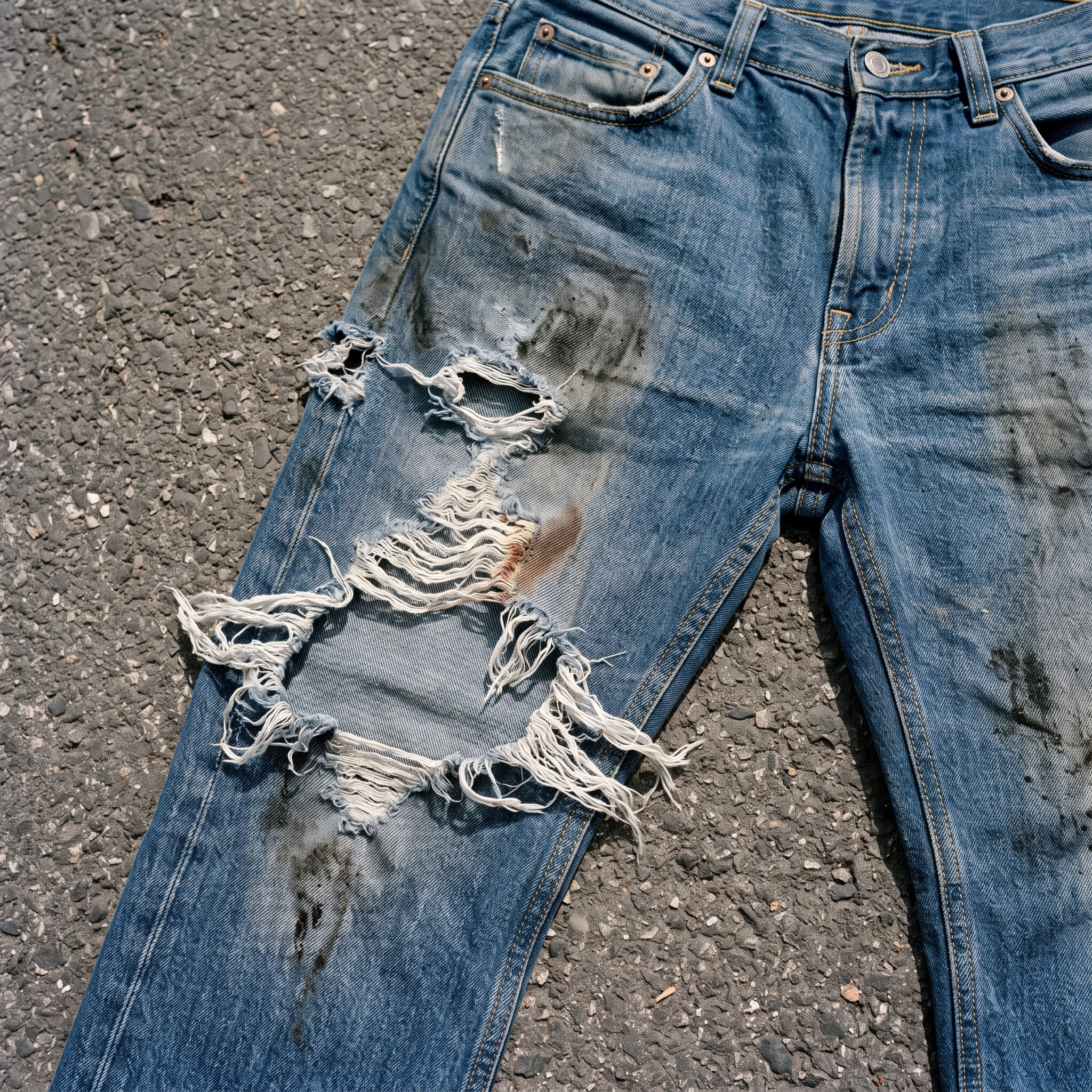
Through to skin in 0.6 s. Binned at the roadside.
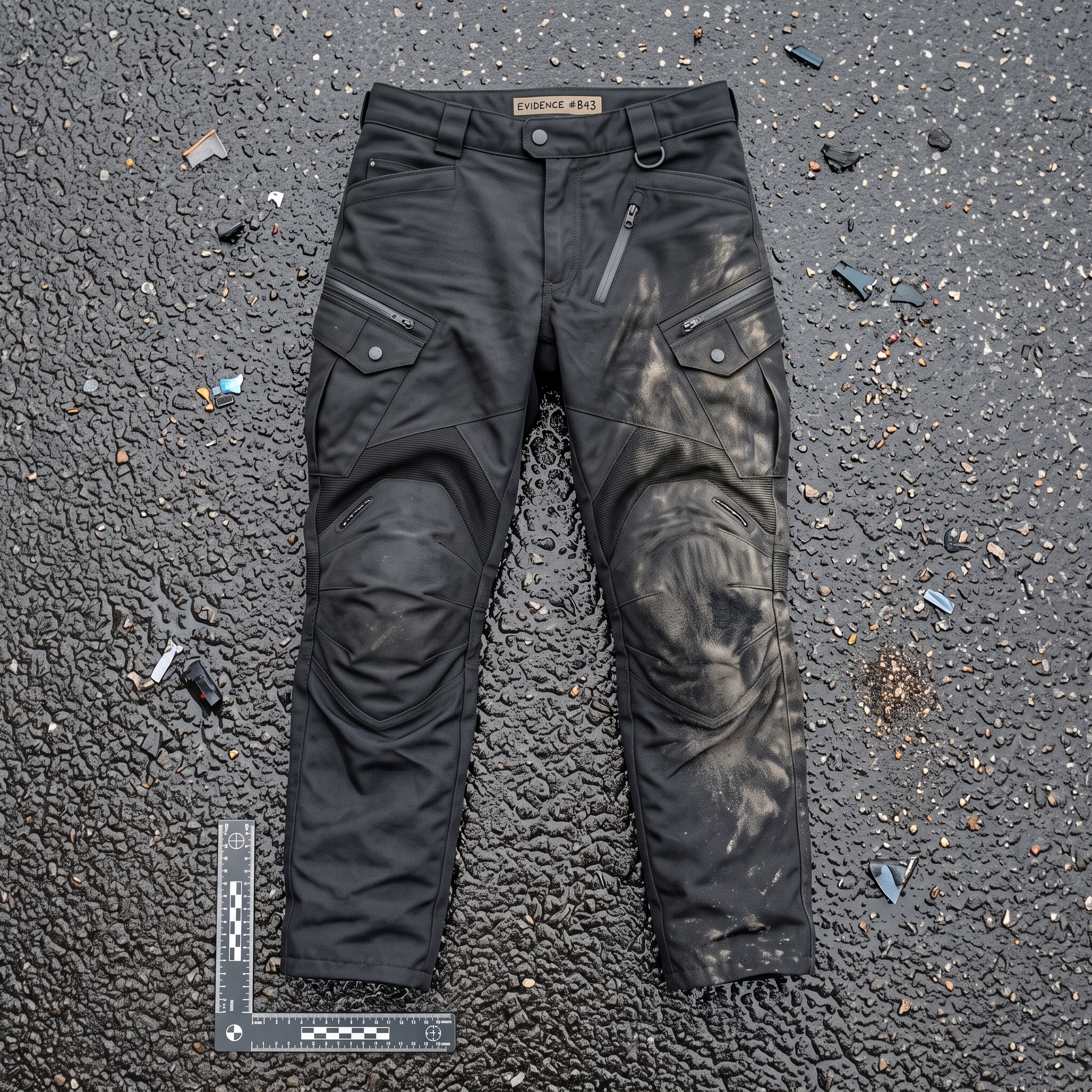
Scuffed. Held. Went back on the bike.
So why is it $69 and not $500?
Two honest reasons. First, the $69.99 is a launch price — RRP is $139.99, and it returns there once introductory stock clears. Second, the premium names charge for AAA over-spec and a heritage logo. For commuting and A-road riding, Class AA is the correct grade — you're not paying $340 extra for protection you'll use on a closed circuit. Same job for your actual riding. A fraction of the price. Plus a free tactical belt in the box.
- CE EN 17092 — Class AA (certificate + test report published)
- Cordura reinforcement at knees, hips and seat
- CE impact armor, knees + hips — slim, sits where it should
- 4-way stretch, water-repellent, 10 functional pockets
- XS–5XL · true-to-size guide · free tactical belt
- 30-day money-back · tracked UK delivery
What $69.99 actually buys you
Strip away the launch-price framing and here's the plain version. You're getting a garment tested to the same European standard as pairs that cost three to seven times more, with the protective fabric in the right places, in a cut you'd wear to the shops without a second look. The reason it's $69.99 and not $500 isn't a quiet compromise on the grade — it's that you're not paying for a race-heritage badge or an AAA over-spec built for a closed circuit you'll never ride.
The honest catch, because a suspicious buyer deserves one: it's water-repellent, not waterproof, and it's Class AA — the grade for real-world road speeds, not sustained track pace. If you're a track-day regular pinning 130 down a straight, buy the AAA leathers; that's genuinely what you need. If you're a commuter, a courier, a weekend A-road rider, AA is exactly what the standard specifies for your riding — and paying quadruple for AAA is spending real money on a scenario that isn't yours.
"My bike might be a write-off, but I'm most definitely not. I'll never ride in normal jeans again."— Mark Lee, after a crash
Is the CE rating genuine at this price?
Yes — Class AA to EN 17092, with the certificate and test report published. The $69.99 is a launch price (RRP $139.99), not a reflection of the grade.
How do I know it's not fake Cordura?
Cordura panels sit at the knees, hips and seat — the slide zones — and are shown in macro detail. The grade is verified by the published EN 17092 report, not just a tag.
What if it doesn't fit or I change my mind?
30-day money-back, free tactical belt included, tracked UK delivery. Risk is on us, not you.
Class AA vs AAA — am I under-protected?
No, for road use. AAA is specified for the highest sustained speeds (think track). AA is the grade built for city, commuting and A-road riding up to around 40 mph — the riding most people actually do. Buy for your riding, not for a scenario you won't be in.
Can I actually see the certificate before I buy?
Yes — the EN 17092 Class AA certificate and test report are published, and if you email before ordering they'll send the report over. A brand that won't show you the paperwork is telling you something.
What sizes, and do they run true?
XS–5XL with a true-to-size guide. Owners report a slim-to-regular jean fit; the 4-way stretch is forgiving between sizes, and there's a 30-day money-back if it's not right.
This is an advertorial. Quotes are real rider verbatims from public reviews and crash accounts. Water-repellent, not waterproof.