
Filthy On Site, Sharp For the Quote
The Spare Pair in the Van: A Tradesman-Turned-Boss on Why "Tough" Work Trousers Always Look Rough — and Why That Look Costs You the Next Quote.
For years I kept one clean pair in the van, changed at the last lay-by before a customer's, and changed straight back on site. Then I worked out the real reason my "hard-wearing" trousers looked dragged through a hedge — and it's the same reason they never lasted. It was never me being scruffy.
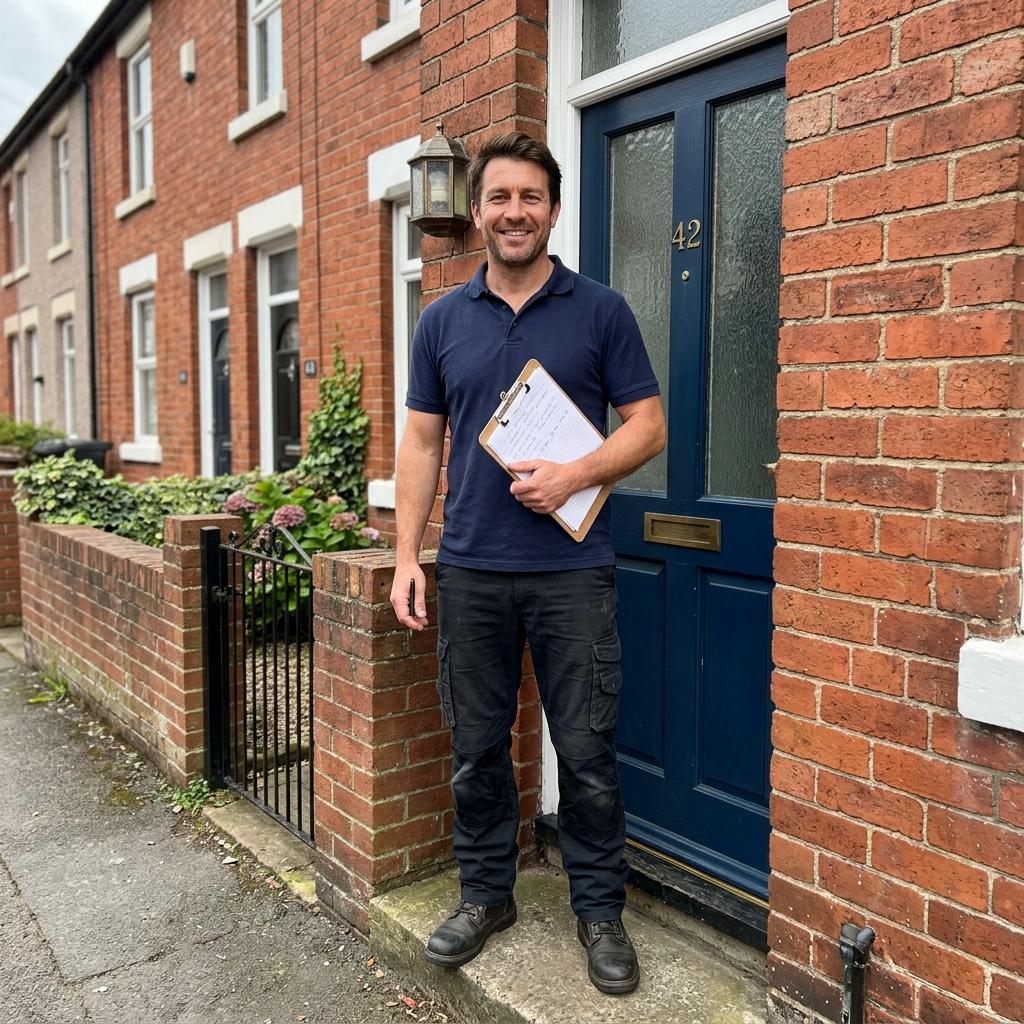
For nine years I kept a spare pair of trousers in the van. Not for spills, not for a rip — for people. If I had a customer to see, a new build to quote, a bathroom to price up, I'd pull into the last lay-by before their road and change into the "good" pair. Do the meeting looking half-human. Then change straight back into the site pair before I touched a tool. I did this so often my mate started calling the good pair my "front-door trousers." He wasn't joking, and neither was I.
If you run your own show, you'll know exactly why. When you turn up to price a kitchen, you are the pitch. There's no showroom, no brochure, no salesman — there's you, a clipboard, and thirty seconds on the doorstep where the customer decides whether they trust you with eight grand of their house. And the trousers I actually worked in didn't help me. Faded to a grey-brown, seams gone furry, one knee shinier than the other, a dye stain that no wash would shift. They looked, as an old plasterer once put it, "dragged through a hedge." So I hid them.
For years I believed the reason. Everyone in the trade believes it. It's the oldest rule on any site, passed down like gospel: a work trouser is either tough or it's smart. Never both. You either buy the heavy, armoured stuff that survives the job and looks like a binbag by month three — or you buy something sharp that falls apart the first time you kneel in gravel. Pick your poison. Keep a spare pair in the van for the bits where it matters.
The lie I built my whole kit around
I want to show you the exact thing tradesmen keep asking for, because it took me years to admit I was one of them. On r/manufacturing, a bloke who splits his week between the floor and the office wrote something I could have written myself: "I've struggled to find pants that look reasonable to wear to meetings, but still hold up well when I'm working on the shop floor." On r/Carpentry, another wanted trousers "classy enough for quoting and other management work." Different trades, same trapped man — someone who has to be a grafter and a face at the same time, and has been told he can only dress for one.
"I've struggled to find pants that look reasonable to wear to meetings, but still hold up well when I'm working on the shop floor."— verified tradesman, r/manufacturing
Read that again — "look reasonable to wear to meetings, but still hold up on the shop floor." That's not a man asking for fashion. That's a man asking for his trousers to stop making him look poorer than he is in front of the people who pay him. And every shop tells him the same thing I got told: pick a lane.
Here's what took me a stupidly long time to see. The reason the "tough" trousers look rough is the exact same reason they don't last. They're two symptoms of one cause. Once you see it, you can't un-see it — and you never buy a "spare pair for the van" again.
Why "tough" fabric turns scruffy AND wears out
Think about what the old-school "hard-wearing" work trouser actually is: a heavy, stiff, rigid cloth. The whole sell is that it's thick, so it must be strong. And that one property — stiffness — is what quietly ruins it on both fronts at once.
Stiff fabric can't move with you. So every time you squat, kneel or reach, the trouser doesn't flex — it creases hard and holds the crease. Do that ten thousand times and the fabric doesn't spring back; it deforms. It bags at the knee, sags at the seat, and sets into a permanently rumpled shape. That's the "dragged through a hedge" look. It isn't dirt — it's a fabric that's lost its shape because it was never built to keep it.
Now here's the part that matters for your wallet. The same stiffness that makes it look scruffy is what makes it fail. A rigid cloth can't absorb your movement, so the movement goes straight into the stitching and the fibres — and they abrade, fray and blow out. Heavy, stiff, dye-heavy fabric also fades and streaks faster, because rigid fibres crack and shed colour where they're forced to fold. Looking rough and wearing out aren't two separate problems. They're the same fabric doing the same thing.
| What you're actually wearing | The fabric | Why it lets you down at the door |
|---|---|---|
| Old-school "tough" trouser | Heavy & stiff | Creases, bags, fades — looks worn out in months, and blows out around the same time |
| "Smart" workwear | Thin & rigid | Looks sharp for a fortnight, then rips the first kneel — you bin it |
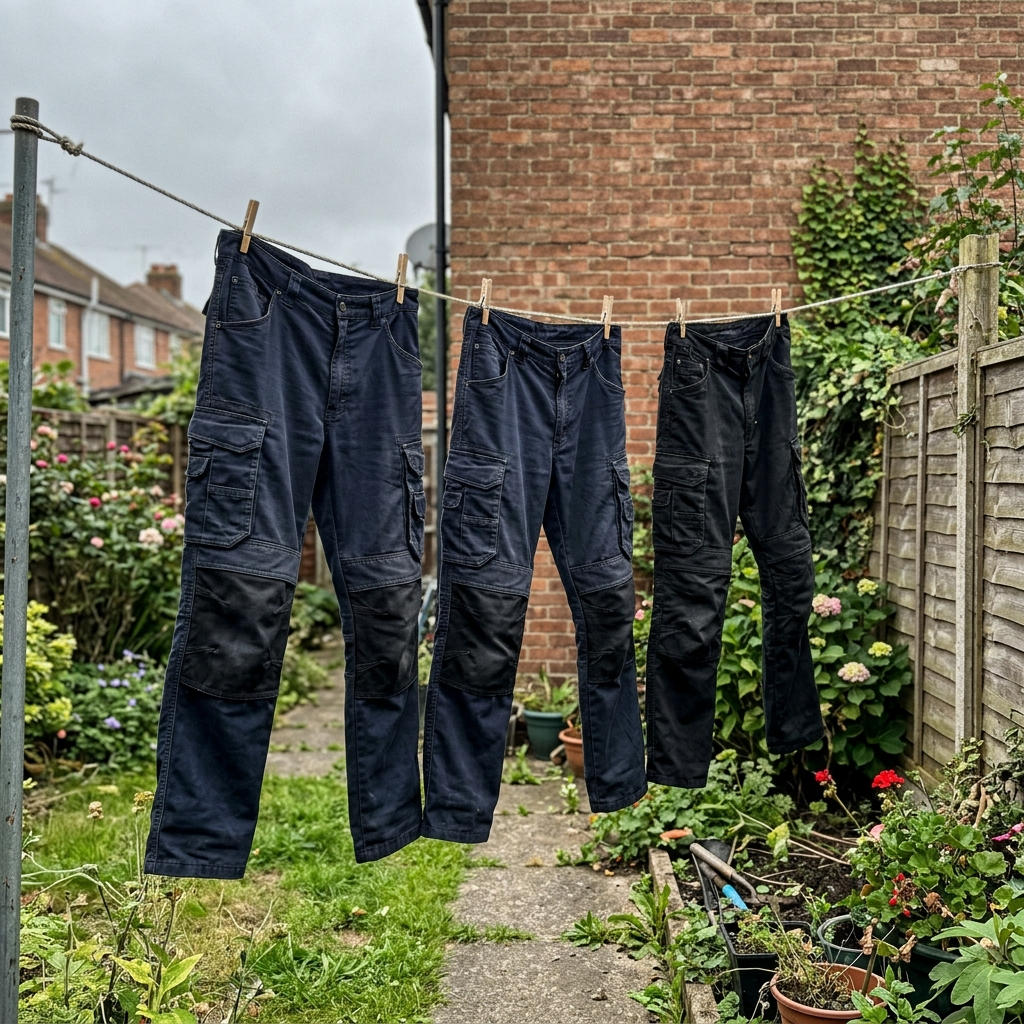
| Bastion — technical stretch + clean cut | Flexes & recovers | Holds its shape and colour under abuse — presentable months in |
Tough and smart aren't opposites. They only look like opposites when the fabric is wrong.
The "keep a clean pair in the van" habit is a workaround for a fabric problem, not a laundry problem. A stiff cloth deforms under repeated flex — it holds creases, bags at the knee, and sheds colour — so it looks tired long before it's worn out, and worn out shortly after. A fabric with real recovery does the opposite: it flexes with the squat, then springs back to shape, so it keeps its line and its colour under exactly the abuse that wrecks the stiff stuff. Same abuse, opposite outcome. Fix the fabric and the spare pair in the van becomes pointless.
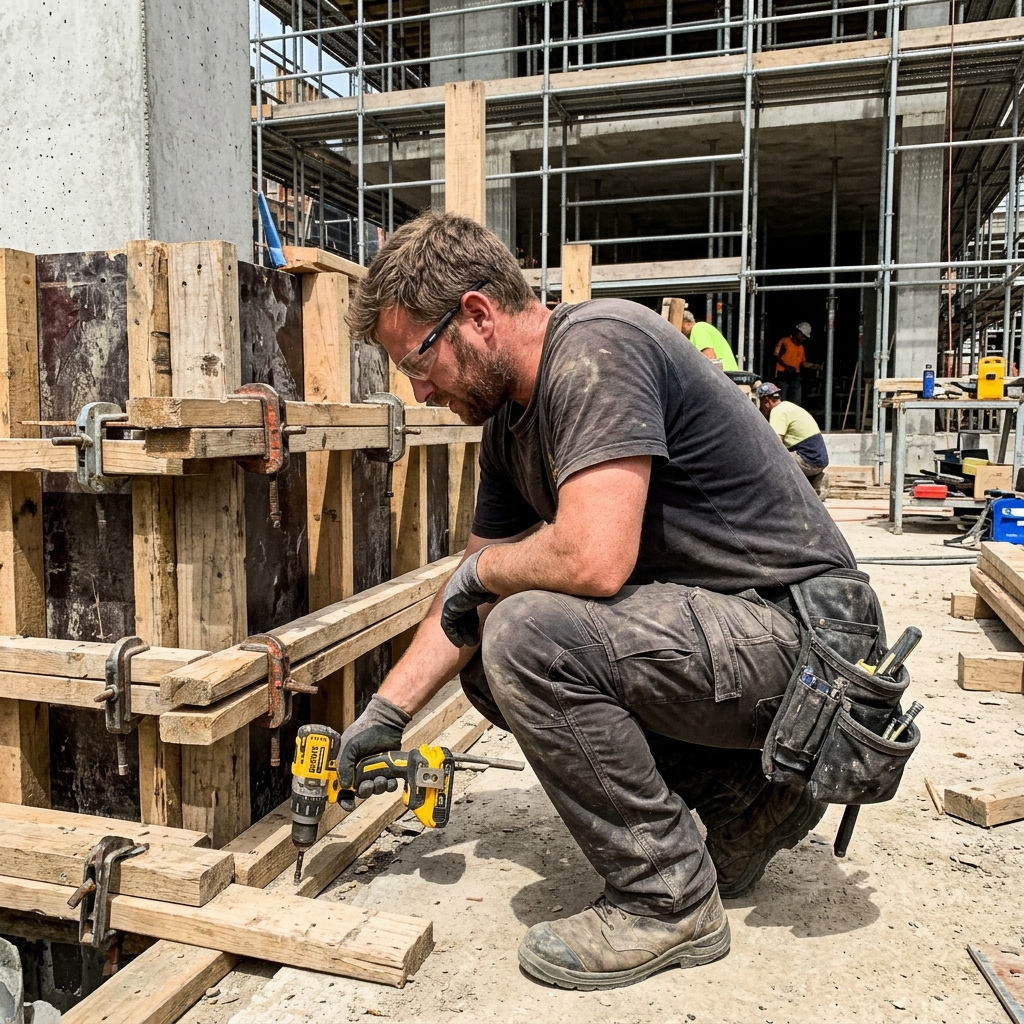
Squatting under the units, grinding, dust everywhere. Worked hard in them all morning.
Same trousers. Brushed down, still holding their shape. Quoting the next job, looking the part.
One-man bathroom firm. I used to keep a "clean pair" in the van and change before every quote — no joke, twelve years of doing that. Six months in these and I don't bother anymore. Crawl under a bath at ten, price a job at two, same trousers, and I still look like a business not a bloke off a skip.
Run my own kitchen fitting crew. Old trousers went baggy and grey in weeks — you turn up to quote in that and the customer knocks you down on price before you open your mouth. These hold their shape and the colour hasn't shifted. Won two jobs last month I reckon I'd have lost looking scruffy.
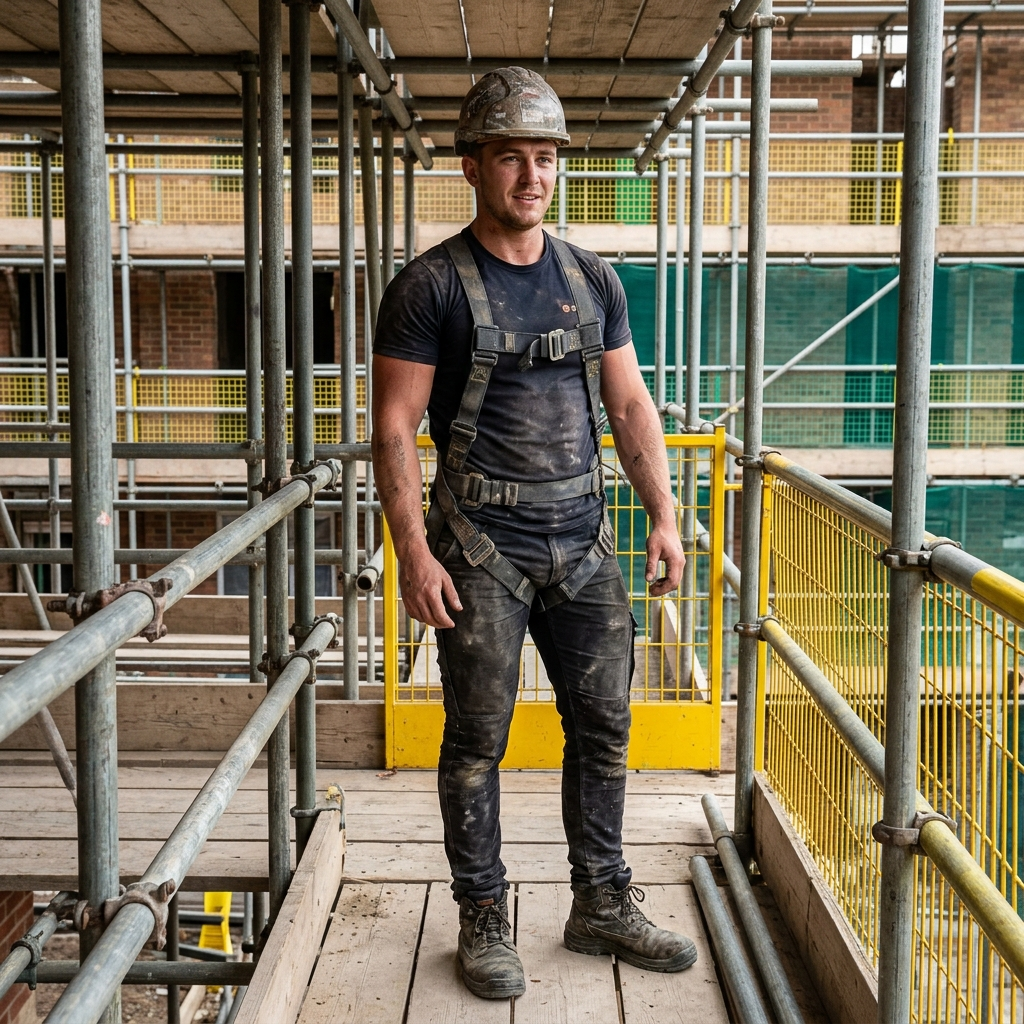
Chippy, my own gaffer. Classy enough for quoting, and I've had them on scaffold and on my knees all week and they've held up. Don't look like a transformer either — just proper trousers that happen to be tough. That's all I ever wanted.
Plumber, self-employed. Genuinely surprised — brushed the dust off after a filthy job and they looked presentable enough to walk into the customer's kitchen and price the next bit. Knocked a star only because I want a second colour. Fit's true, room in the thigh.
"Presentable AND tough for £59? That sounds too cheap."
Good — be suspicious, the trade's earned the right to be. Plenty of blokes have spent £120 a pair on the big names and still ended up with baggy, faded trousers they were embarrassed to quote in. Because past a certain point, that £120 isn't buying you a fabric that holds its shape. It's buying the badge on the pocket, the shop rent, the van sponsorship. The cloth itself — the bit that decides whether you look sharp or scruffy at the door — stopped improving a long time ago.
What actually decides how a trouser looks after six months isn't the price. It's the fabric's recovery — whether it springs back to shape or sets into a rumpled bag — and the cut. A clean, tapered cut in a technical stretch cloth holds its line and its colour under abuse. A stiff, dye-heavy cloth in a boxy cut doesn't, whether it cost you £40 or £140. The £59.99 isn't the quality — it's an introductory launch price (RRP £119.99). The build is the quality.
What's actually in them (and where)
The maths nobody does on the "scruffy" pair
Here's the bit that changed my mind for good. I always thought of my trousers as a cost — thirty, forty quid, whatever. I never once thought of them as part of the pitch. But when you're the face of your own firm, the way you look on that doorstep is the pitch. A customer who sees a sharp, sorted tradesman quietly assumes the work will be sharp and sorted too. A customer who sees a bloke in faded, bagged-out kit assumes corners get cut — and they haggle you down, or they ring the next number.
One quote lost because you turned up looking rough costs more than a year of trousers. That was the sum that finally landed. The spare pair in the van wasn't clever — it was me quietly admitting my work trousers made me look worse than I was, and paying for two lots of trousers to hide it.
"They still pass as normal work pants." — the whole trick, in one line from r/BuyItForLife. Tough enough for the tools, ordinary-smart enough that nobody clocks them as "work gear."— verified tradesman, r/BuyItForLife
And no — before anyone asks — this isn't the stiff, strapped, pouched "tactical" look either. One carpenter put the fear better than I can: you want trousers where "you don't look like a transformer tactical work culture douche." Fair. A clean tapered cut is the opposite of that. It just looks like a decent pair of trousers. Which, when you're stood on a stranger's doorstep asking them to trust you, is exactly the point.
Throw the spare pair away
There's a "good pair" folded on the passenger seat of a lot of vans. Blokes tell themselves it's being professional. Really it's a confession — the trousers you actually work in make you look like less than you are, so you hide them from the people who pay you. You can keep changing in lay-bys, or you can wear one pair that earns its look on the job instead of pretending it never went near one.
If you run your own firm and you've ever changed your trousers before a quote — you already know the spare pair was never the answer. It was never you being scruffy. It was the fabric.
Can a work trouser really be tough AND presentable?
Yes — the "pick one" rule only holds when the fabric is a stiff, heavy cloth that deforms and fades. A technical 4-way stretch fabric flexes then recovers, so it holds its shape and colour under exactly the abuse that ages the stiff stuff. Add a clean tapered cut and you get a trouser that survives the job and still looks the part at a customer's door.
Why do my "hard-wearing" trousers look worn out so fast?
Because stiff, thick fabric can't move with you — it creases hard, holds the crease, bags at the knee and sets into a rumpled shape. The same rigidity also cracks the dye and drives the stitching to fail. Looking rough and wearing out are the same fabric problem, not two separate ones.
Is £59.99 really the price?
It's an introductory launch price (RRP £119.99), and every pair comes with a free set of pro knee pads. What makes them hold their shape and colour is the technical stretch fabric and the cut — not the price tag.
Do they look "tactical" or over-the-top?
No. Clean tapered cut, no strapped-on pouches or holster flaps — they read as an ordinary decent pair of trousers, not a costume. Tough enough for the tools, plain enough to quote in.
Will they still hold up on site?
Yes — 4-way stretch, a gusseted crotch and triple-zone reinforcement at knees, seat and hips, plus built-in knee-pad mounts. The point is that the same build that keeps them tough is what keeps them looking sharp.
Waterproof?
Water-repellent, not waterproof. A wet morning and site splash bead off; they're not a drysuit for a sustained downpour.
This is an advertorial. Quotes marked as forum posts are real tradesman verbatims from public threads. Water-repellent, not waterproof.