
It Wasn't the Screwdriver: The Work Trouser Pocket Problem
It Was Never the Screwdriver. A Maintenance Sparky Explains the Real Reason Your Pockets Wear Through at the Corner — and Drop Your Tools Down Your Leg.
You blame the tool poking a hole in the fabric. It isn't the tool. It's one un-reinforced corner almost every brand builds thin — and it's the same reason a screwdriver slips out mid-ladder. We dug into why tradesmen keep losing tools through their own trousers, and the £59 pair quietly fixing it.
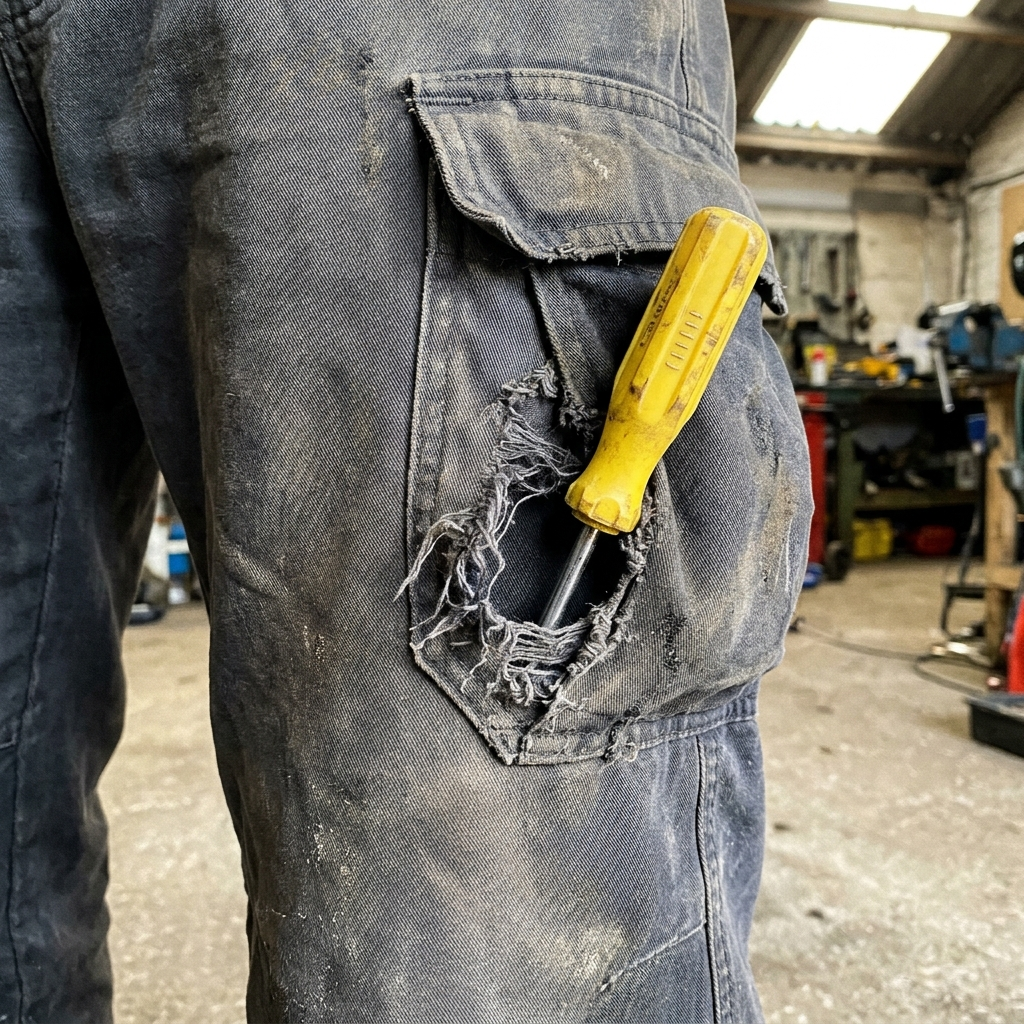
Ricky is a maintenance sparky. No van full of drawers, no bag left at the bottom of a ladder — his tools live on him. Testers, drivers, side cutters, a phone, the little bits that make the difference between one trip up and three. So the day a screwdriver slid clean out the bottom of his side pocket and clattered down onto the plant-room floor from six feet up, it wasn't just annoying. It was the third pair of trousers that year to do it. "The pockets get holes in them within a week when a screwdriver's in there," he said. "Then everything I own ends up in the leg."
If you carry your kit on you rather than in a bag, you already know this feeling. And you've probably done what Ricky did about it — blamed the tool. It's the screwdriver's fault. The chisel's fault. The sharp bit of the multi-tool. So you tell yourself you'll be more careful how you drop things in, or you buy a "heavy-duty" pair with more pockets, hoping quantity fixes it. It lasts a bit longer. Then it goes again, exact same place: the bottom corner.
Here's the part nobody behind a trade counter ever says out loud: it was never the tool. It's the corner.
Why the corner always goes first
Pick up a standard work trouser and turn a side pocket inside out. Look at the very bottom corner — where a screwdriver, a pencil, a bit of steel actually sits. On most trousers that corner is a single layer of thin pocketing fabric, folded and stitched, with nothing behind it. It was designed to hold a phone and a wallet, not a hard steel point that presses into the exact same square centimetre a thousand times a day.
Now think about what actually happens down there. Every time you walk, kneel, climb, or drop into a squat, that hard object shifts and rubs against that one thin corner. It doesn't stab through in one go — it abrades. Grinds. A little every day, until the weave gives up and opens a slit exactly where the point rides. That's why it's always the corner, always about a week of real graft, and always the pocket you keep your driver in.
And here's why "more pockets" doesn't save you: bolting six flappy pockets onto a trouser doesn't reinforce a single one of them. You've just given yourself more thin corners to wear through — and a load of loose pockets that swing, twist and spill. As one electrician put it about an expensive pair, the pockets were "a bit too flappy, and sometimes the pocket will twist over itself, dropping out my tools."
"I wish the pockets were a little more sturdy… Feels a bit too flappy, and sometimes the pocket will twist over itself, dropping out my tools."— verified tradesman, r/ukelectricians (on a £120 brand)
Read that again. A grown man, on a top-shelf pair, watching a pocket turn itself inside out and post his tools onto the floor. He's not clumsy. The pocket is built to fail him. And the thing he actually wants is almost heartbreakingly simple — it's the first thing tradesmen ask for on those threads: "the pockets not getting holes in when a screwdriver is in it." That's it. That's the whole ask. And most brands still can't deliver it.
The second thing nobody tells you: the thigh pocket is in the wrong place
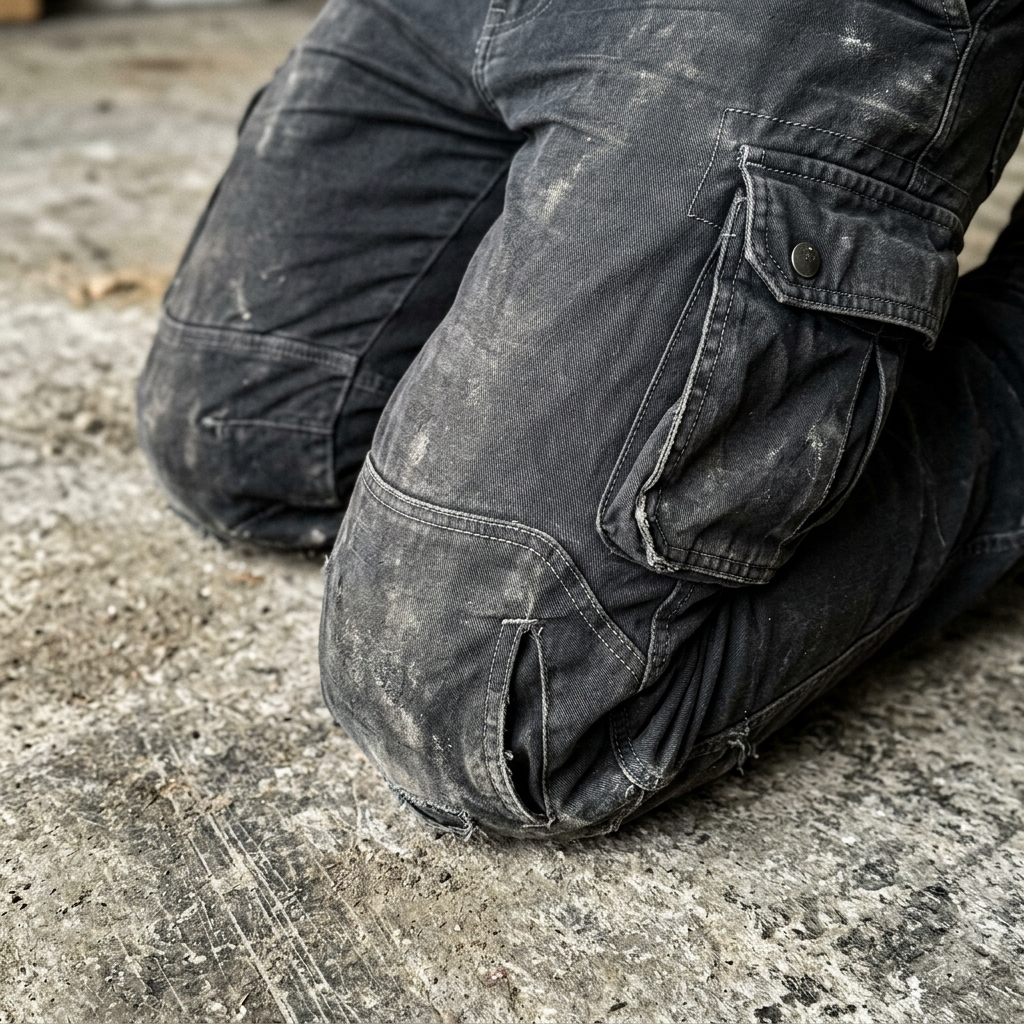
There's a related problem that only shows up when you actually work. The standard cargo thigh pocket is a flat patch sewn onto the front of the leg — right where your knee bends. Fine when you're stood up. But the second you drop into a squat under a boiler or kneel on a joist, that flat pocket folds in half, and whatever's in it — phone, folding rule, a fat marker — gets crushed into the crease of your own knee. It digs in. It stops you kneeling square. And half the time it shoves the thing back out as you stand.
Tradesmen describe both sides of this exactly. The complaint: a phone in a flat thigh pocket that "digs in every time I squat." And the thing they wish for instead, in their own words: "a good phone pocket that holds it secure and allows quick access," and a thigh pocket where a phone "can shift out of the way when crouching down or climbing" instead of jamming into your leg. Same job, opposite outcome — and it comes down entirely to where the pocket sits and how it's shaped.
| What you're actually wearing | The pocket | What happens on a real day |
|---|---|---|
| Standard side pocket | Single-layer corner | Screwdriver abrades one thin spot — holes through in a week, tool drops into the leg |
| "More pockets" trouser | Six flappy patches | Pockets twist, swing and spill — more thin corners, not fewer holes |
| Flat thigh cargo | Sits on the knee-bend | Phone folds into the crease when you squat — digs in, pops back out |
| Bastion — reinforced openings, placed to work | Reinforced + zipped thigh | Corner holds a hard tool; zipped pocket keeps the phone secure and off the knee |
It's not a small tweak. It's the difference between binning three pairs a year and keeping your tools where you put them.
A pocket doesn't "rip." It wears. A hard tool point rubbing a single-layer corner a thousand times a shift is doing the same job as sandpaper — slowly. No amount of being "careful" fixes a corner with nothing behind it. Reinforce the opening and the base of the pocket, place the storage where the leg doesn't fold it, and give a man enough proper pockets that he isn't cramming three drivers into one weak corner — and the holes simply stop appearing. That's the whole difference.
Thin corner, one week in — a screwdriver already on its way through.
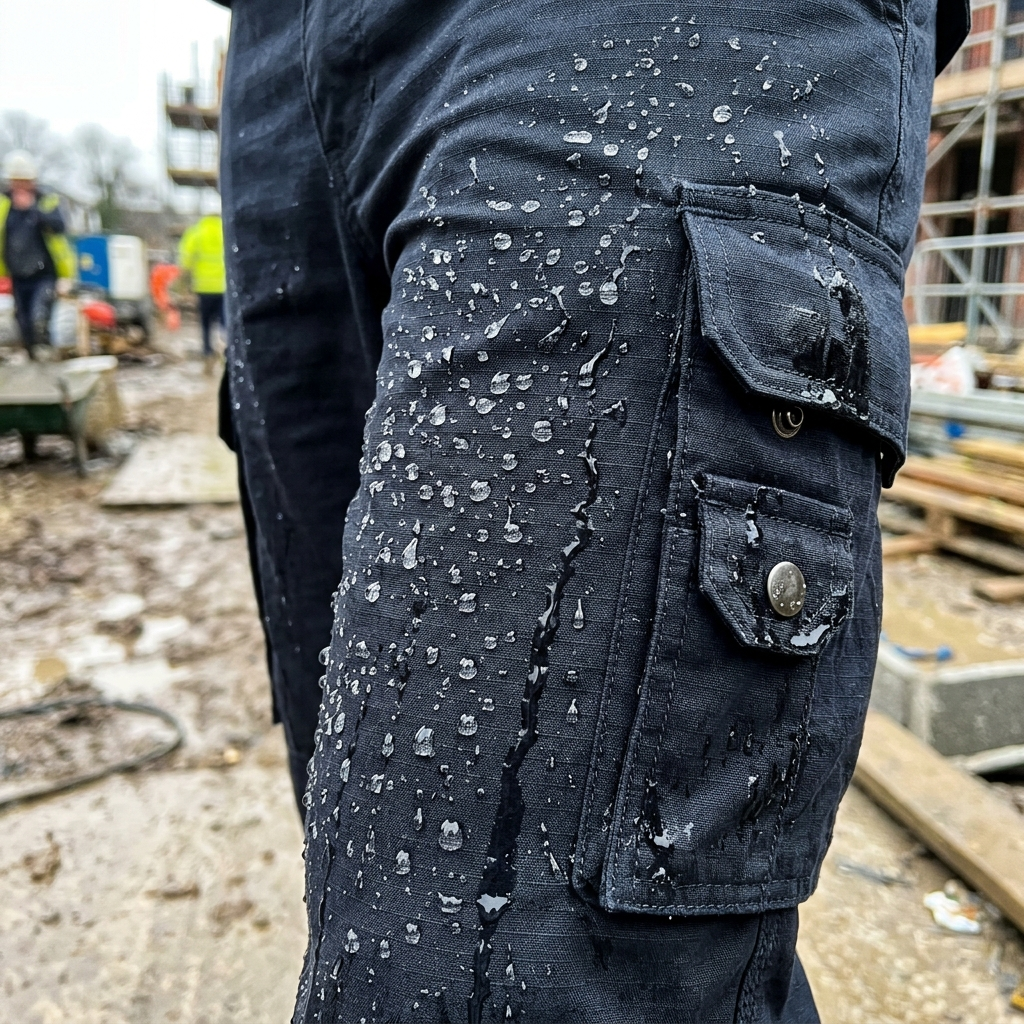
Reinforced opening, zipped thigh — the tool stays in the pocket.
The two things that actually stop it
It isn't more pockets and it isn't being gentler with your gear. It's a different build — and it comes down to two things working together.
One: reinforced pocket openings and bases. Where a hard tool sits and enters — the mouth of the pocket and that bottom corner — the fabric is doubled and bar-tacked instead of left as a single thin layer. So when a driver rides against it a thousand times a day, it's rubbing against something built to take it, not something that gives up in a week. Boring, invisible engineering — which is exactly why the brands that skip it never mention pockets at all.
Two: pockets placed and shaped to work, not to flap. A zipped thigh pocket that actually holds a phone secure — so it can't twist over itself and post your tools onto the floor — and cargo storage shaped so a phone shifts out of the way when you crouch instead of jamming into your knee. Add reinforced openings to placement that respects how a leg actually moves, and you've killed both problems at once: the wear-through, and the tools-in-the-leg.
Maintenance sparky — no bag, everything's on me. I used to wear a hole in the corner of the driver pocket in a week, then the tool would drop out the bottom into my trouser leg, once off a ladder. Nine months on these and the pocket's dead intact. First time in years I haven't fished a screwdriver out of my own turn-up.
Spark. My last pair, an expensive one, the pockets went too flappy and kept twisting over and dropping my side cutters. These don't do that — the zipped thigh pocket holds my phone dead secure and it's not digging into my knee when I squat into a consumer unit. Cannot believe they're fifty-nine quid.
HVAC engineer, on and off ladders all day. Old trousers, my phone lived in the flat thigh pocket and got crushed into my knee every time I knelt on a plant. The pocket placement on these actually thought about that. Reinforced openings too — I keep a stubby driver in the side and no hole yet.
Tiler. Pockets are proper sturdy — I don't get sharpies and a snap-off blade tearing out the side seam like the cheap Screwfix ones. Knocked a star only because I'd love one more inner pocket. Fit runs true — bigger thighs, still room to move.
"£59 for trousers with pockets that actually hold up? That sounds too cheap."
Good instinct — hold onto it, because the trade's been burned enough. Plenty of blokes have spent £120 a pair on the big names and still had the pockets twist, flap and wear through in a couple of months ("I've spent over £600 on loads of different pairs of Snickers and they all rip within 6 months," one wrote; another, on the same brand, called the pockets "too flappy" and watched them drop his tools). Past a certain point, the price isn't paying for better pockets. It's paying for the badge, the shop rent, the van sponsorship — while the actual pocketing fabric and bar-tacking stopped improving a long time ago.
What makes a pocket last isn't the name on the trouser. It's the boring stuff you can't see on a shelf: doubled, bar-tacked openings, a zipped thigh pocket that holds instead of flaps, and placement that respects how a leg bends. Get those right and a £60 trouser keeps your tools where you put them better than a £130 one that swings them onto the floor. The £59.99 isn't the quality — it's an introductory launch price (RRP £119.99). The build is the quality.
What's actually in them (and where)
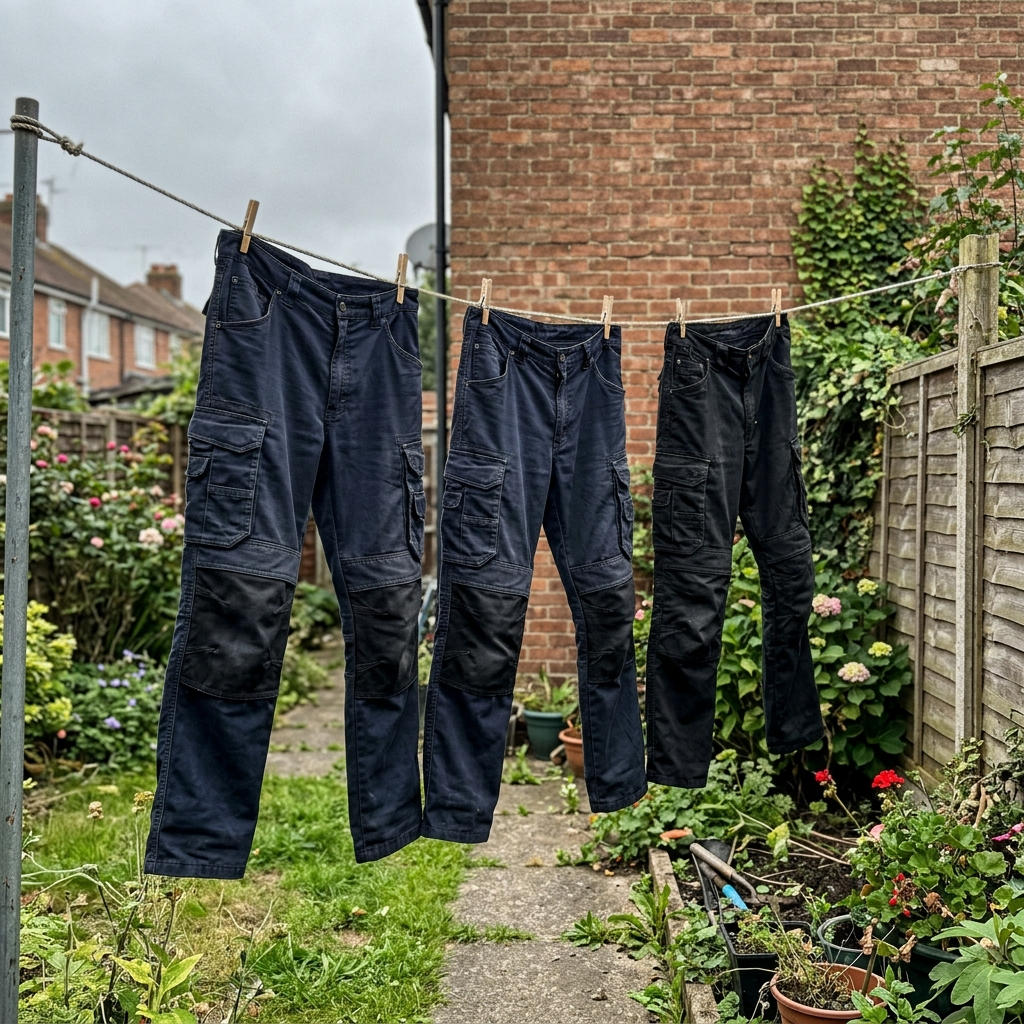
Stop losing tools through your own trousers
There's a quiet cost to a worn-out pocket corner that never shows up on the price ticket. It's the driver you drop off a ladder. The tester that's suddenly in your turn-up instead of your pocket. The three trips up and down because you can't keep your kit on you. Blokes tell themselves they'll be more careful, or they bin another pair and start again. Really they're refusing to admit the pocket was the problem, not the tool. You can keep wearing through the same thin corner every week, or you can wear one built not to wear through in the first place.
If you carry your tools on you and you're on pair number three this year — before you buy another pair with even more flappy pockets, don't. It was never the screwdriver.
Why do my work trouser pockets always wear through at the corner?
Because most side pockets are a single thin layer at the bottom corner, with nothing behind them. A hard tool point rubs that one spot a thousand times a day and abrades a hole through in a week or two. Reinforced, doubled, bar-tacked openings take the wear instead of giving up — that's what actually stops it, not being "more careful" with your tools.
My phone digs into my knee when I squat — is that fixable?
Yes, and it's a placement problem, not you. A flat thigh pocket sat right on the knee-bend folds your phone into the crease when you kneel. A zipped thigh pocket placed and shaped to work keeps the phone secure and off the fold, so it's not crushing into your leg every time you drop into a squat.
Is £59.99 really the price?
It's an introductory launch price (RRP £119.99), and every pair comes with a free set of pro knee pads. The build — reinforced pocket openings, zipped thigh pocket, triple-zone reinforcement — is what makes them last, not the price tag.
Will the pockets hold a screwdriver without going flappy?
That's the whole point of the reinforced openings — they don't twist over themselves and post your tools onto the floor, and the zipped thigh pocket holds secure. There's enough proper storage that you're not cramming three drivers into one weak corner either.
Do the knee pads really slot in?
Yes — the knees have built-in mounts and the free pro knee pads drop straight in, so they stay on the kneecap instead of sliding down your shins.
Waterproof?
Water-repellent, not waterproof. A wet morning and site splash bead off; they're not a drysuit for a sustained downpour.
What if the size is wrong?
30-day money-back, free pro knee pads included. Try them, check the fit and the pockets, send them back if they're not right.
This is an advertorial. Quotes marked as forum posts are real tradesman verbatims from public threads. Water-repellent, not waterproof.