
130 Pounds and It Still Blew Out: The Work Trouser Price Trap
I Spent £600 on "Premium" Work Trousers in One Year. Every Pair Blew Out. A Chippy Explains the Con Nobody in the Trade Talks About.
The story every tradesman tells himself — "if I pay £120, it'll last" — is exactly how the big names keep you paying £120. Past a point, the price stops buying you better trousers. We looked at where that money actually goes, and the £59 pair quietly ending the cycle.
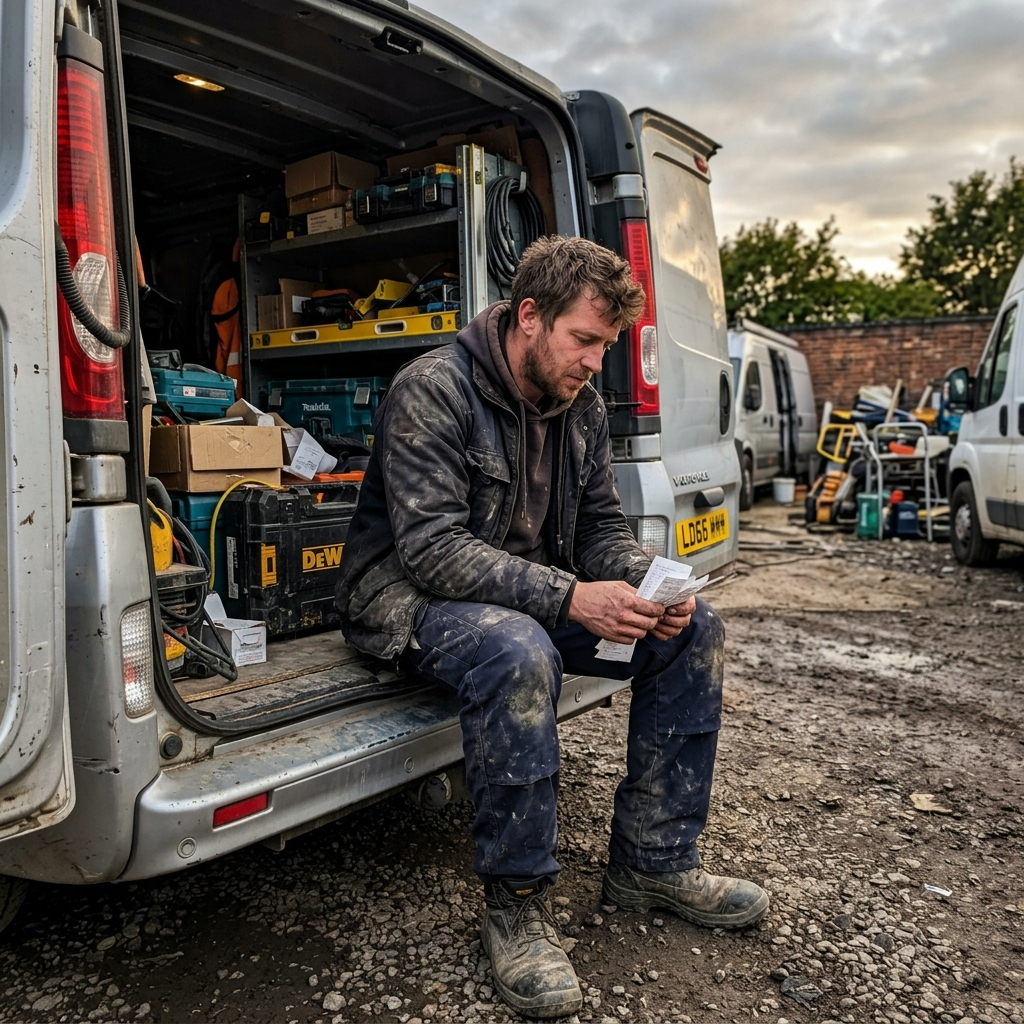
I did the sum on a Sunday night, sat in the back of the van with a fistful of receipts and a can going warm on the wheel arch. Six hundred quid. That's what I'd handed over in one year for "premium" work trousers — the big name everyone in the merchants swears by, the ones with the logo you're half proud to be seen in. Five pairs. Every single one split at the crotch inside six months. Some inside three. And the whole time I'd been telling myself the same thing every tradesman tells himself: "they're dear, so they'll last."
They didn't. And when I finally stopped and worked out where that £600 actually went, I felt like a proper mug. Because it turns out the story I'd been telling myself — pay more, get more — is the exact story that kept me paying more and getting the same.
Here's the con nobody in the trade says out loud: past a certain price, you've stopped paying for better trousers. You're paying for the name.
The lie every one of us believes
Walk into any merchants and the pecking order is baked in. The £30 trousers are for the lads who don't know better. The £120 pair with the famous badge — those are for the serious grafter. Pay up, and you're buying into two years of not thinking about it. That's the promise. It's the promise I bought, five times.
And it's a lie — not because expensive is always bad, but because of what happens at the top of the range. Up to a point, more money genuinely buys you better fabric and better stitching. Then it stops. Past that ceiling, the extra fifty or sixty quid doesn't go into the seams. It goes into the shop rent, the sponsored van livery at the weekend race, the ad in the trade mag, the badge on your thigh that tells the site you spent big. The trousers themselves stopped improving a long time ago.
"I've spent over £600 on loads of different pairs of Snickers and they all rip within 6 months, tried DeWalts, they were the same."— verified tradesman, r/AskElectricians
Read that back. Six hundred pounds. Loads of pairs. Every one gone in six months. Then he switched brand — same tier, same price — and got the exact same result. That's not one bad batch. That's a whole tier of the market where a £120 trouser rips like a £30 one, because past that ceiling the fabric and the stitch stopped getting better and the price kept climbing anyway.
Where your £120 actually goes
Think about what you're really handing over when you pay top-of-range for a famous name. A slice is the trousers. The rest is everything that has nothing to do with whether they survive a squat: the marketing, the retail markup, the sponsorship, the reputation you're renting for a season. None of that is stitched into the crotch. None of it is holding your knee together on the third kneel of the morning.
And the thing that would actually make them last — the boring, invisible engineering at the failure points — is often the first thing cut, because it costs money and nobody can see it on a shelf. You can't photograph a gusset for the catalogue. You can't put "triple-zone reinforcement" on a badge. So it quietly disappears, and the logo gets bigger.
"Snickers, never again. Mine blew out the crotch area well within a year and they refused to replace. For me, spending £130 quid plus on work trousers, they want to be lasting two years plus."— verified tradesman, r/Construction
That's the betrayal, in one sentence. He did everything right by the trade's logic — paid the premium, bought the name, expected two years. Got under one, and got told tough luck. The badge didn't owe him anything. It never does.
| What you're actually buying | Where the money goes | What it does on site |
|---|---|---|
| £120 big-name trouser | Badge · shop rent · sponsorship | Rips at the crotch in months — same as a £30 pair |
| £30 "just buy it cheap" trouser | Nothing you can't see failing | Gone in weeks — rebought 3× a year |
| Bastion — £59.99 | The build, not the badge | Gusset + 4-way stretch + triple-zone — lasts the year |
Same fabric-and-stitch quality can sit inside a £30 pair, a £59 pair and a £120 pair. What you pay above the build is what you pay for the name.
There's a ceiling in every category where extra money stops buying performance and starts buying image. Work trousers hit it early. A £120 pair from a famous badge and a £30 pair from the discount rack fail at the same place — the crotch — because past the ceiling neither is spending the extra on the seam that matters. What makes a trouser survive a year on the tools isn't the name. It's whether someone paid for a gusset, real four-way stretch and reinforcement at the knees, seat and hips. That's a build decision, not a price decision.
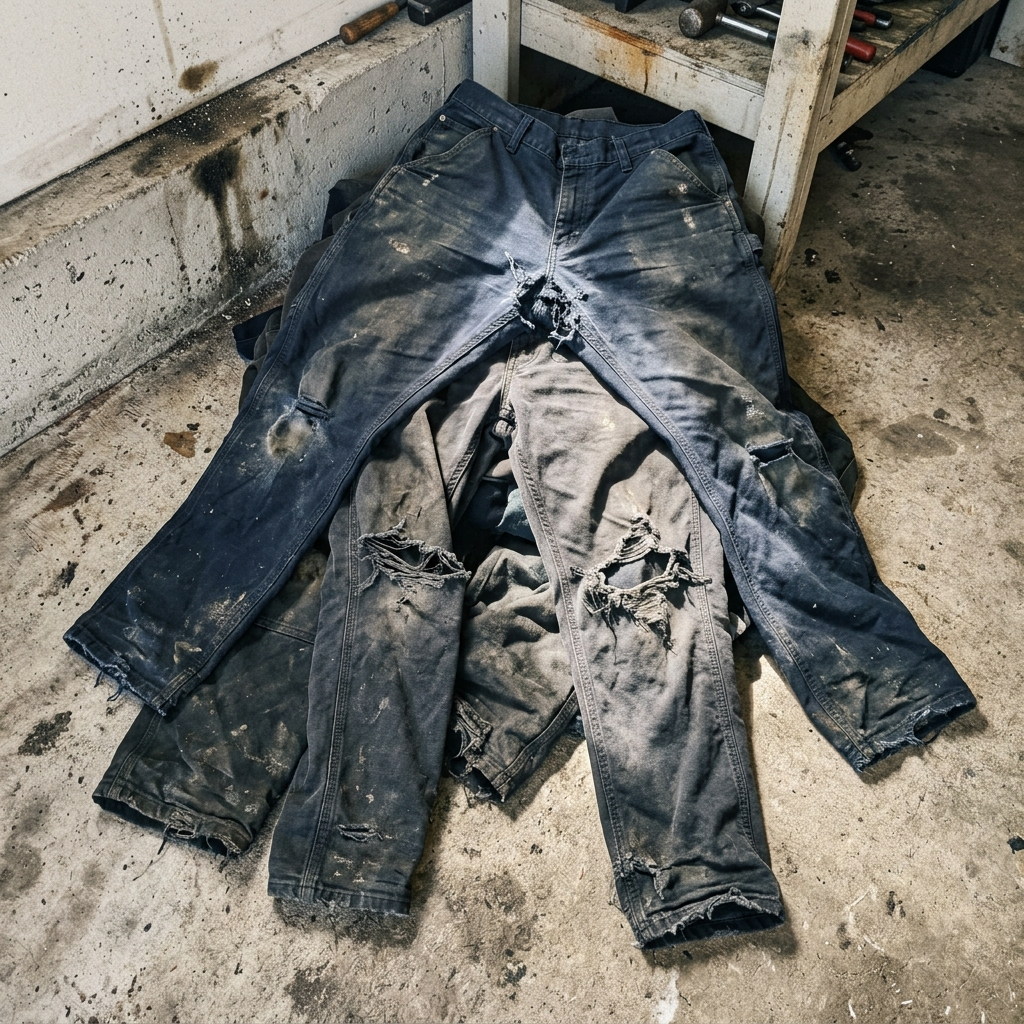
£120 a pair, all blown at the crotch inside six months.
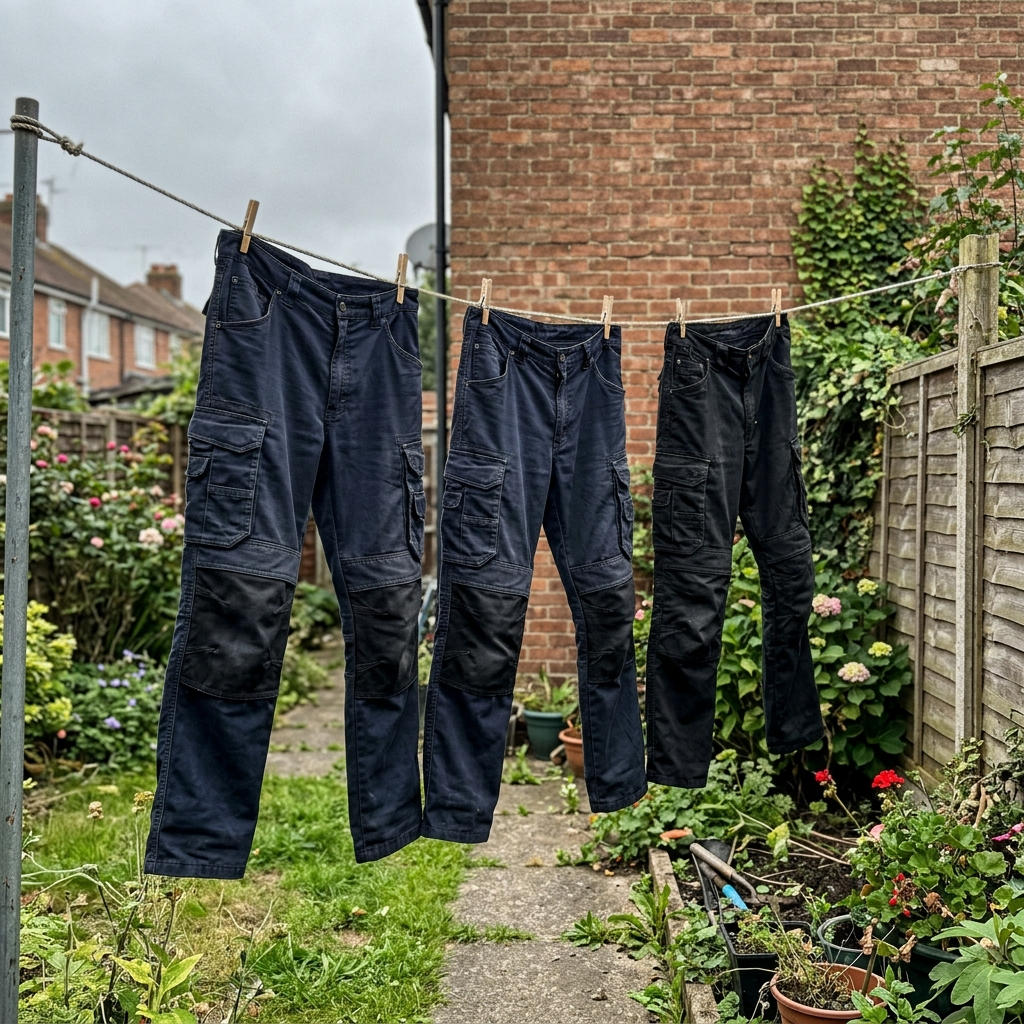
One rotation, built to survive the year — not the logo.
The "cheap" pair is the most expensive one you own
Here's where the trade splits into two camps, both convinced they've cracked it. One lot says buy cheap and treat them as disposable — if it's going to die in a couple of months, at least it died cheap. The other lot pays the premium and expects longevity. And here's the joke: both camps end up back in the merchants three times a year. The cheap crowd because the trousers dissolve. The premium crowd because the badge betrays them.
So let's actually do the sum nobody does. Say you're the "sensible cheap" bloke on the £15–£20 rack. One tradesman worked his out plain as day:
"Three pairs of these pants each year — around £160 or so a year — and they all tear at the crotch around ten to twelve months in."— verified tradesman, r/BuyItForLife
Follow that through. Three pairs a year, every year. That "cheap" trouser isn't a £20 trouser. It's a £150-to-£180-a-year habit — and it climbs, because every rebuy is a wasted afternoon standing in the merchants seething, plus the delivery, plus the day you spent walking around with a dodgy crotch before you replaced it. The sticker price flatters it. The cost-per-wear is brutal.
Now flip it. A trouser that costs £59.99 but genuinely lasts the year — not through hope, through build — isn't £59.99 a wear. It's £59.99 a year. Suddenly the £20 "bargain" is the dearest trouser in the van, and the £120 badge is dearer still for the exact same lifespan.
"Dickie's brand pants are garbage now. Gone to crap over the years."— verified tradesman, r/BuyItForLife
Cheap or premium, the name on the waistband stopped being a promise a while ago. What's left that you can actually trust is the build — and the build is the one thing the badge-buyers and the bargain-hunters both forget to check.
Chippy, twenty years in. I worked out I'd spent the best part of £600 in a year on the famous badge and binned the lot with blown crotches. Bought these on a whinge, half expecting the same. Fourteen months on the first pair and it's alive. Cost me a quarter of what the "premium" lot cost me and it's the only pair I haven't had to replace. The badge was robbing me.
Spark. Always paid top whack thinking I was being clever — dear means good, right? Wrong. Blew three pairs of the pricey stuff in a year. Did the maths one night and nearly fell off my chair. These are half the price and still going after ten months of squatting into consumer units. Turns out I was paying for the logo the whole time.
Groundworker. I was in the "just buy cheap and bin them" camp — three pairs a year, easy. Added it up: about £170 gone, every year, forever. Got the Buy 2 Get 1 and I've stopped rebuying. First time in years the merchants haven't seen me standing there fuming over a split crotch.
Tiler, on my knees all day. Proper stretch, gusset does what it says, knee pads slot straight in. Knocked a star only because I want more colours. But the value's the thing — half the price of the name-brand pair I'd been binning, and it's outlasting all of them.
"Fifty-nine quid? That can't be as good as the £120 pair."
That's the reflex the whole trade is trained to have, and I get it — cheaper feels like a downgrade. But run the logic you've just read. A £120 pair and a £30 pair failed at the same crotch seam, in the same few months, because past a certain point neither was spending the extra where it counts. So "more expensive" already stopped meaning "lasts longer." Once that's broken, the only honest question left is: what's actually built into the trouser?
What makes one last isn't the name — it's the stuff you can't see on a shelf and can't fit on a badge: a gusset that spreads the load off the crotch seam, real four-way stretch that moves with a squat instead of tearing, and triple-zone reinforcement at the knees, seat and hips where every trouser gives out. Get those three right and a £60 trouser outlives a £130 one, because the £130 one paid for a logo and the £60 one paid for the build. The £59.99 isn't the ceiling on quality — it's an introductory launch price (RRP £119.99). The build is the quality.
What's actually in them (and where the money went)
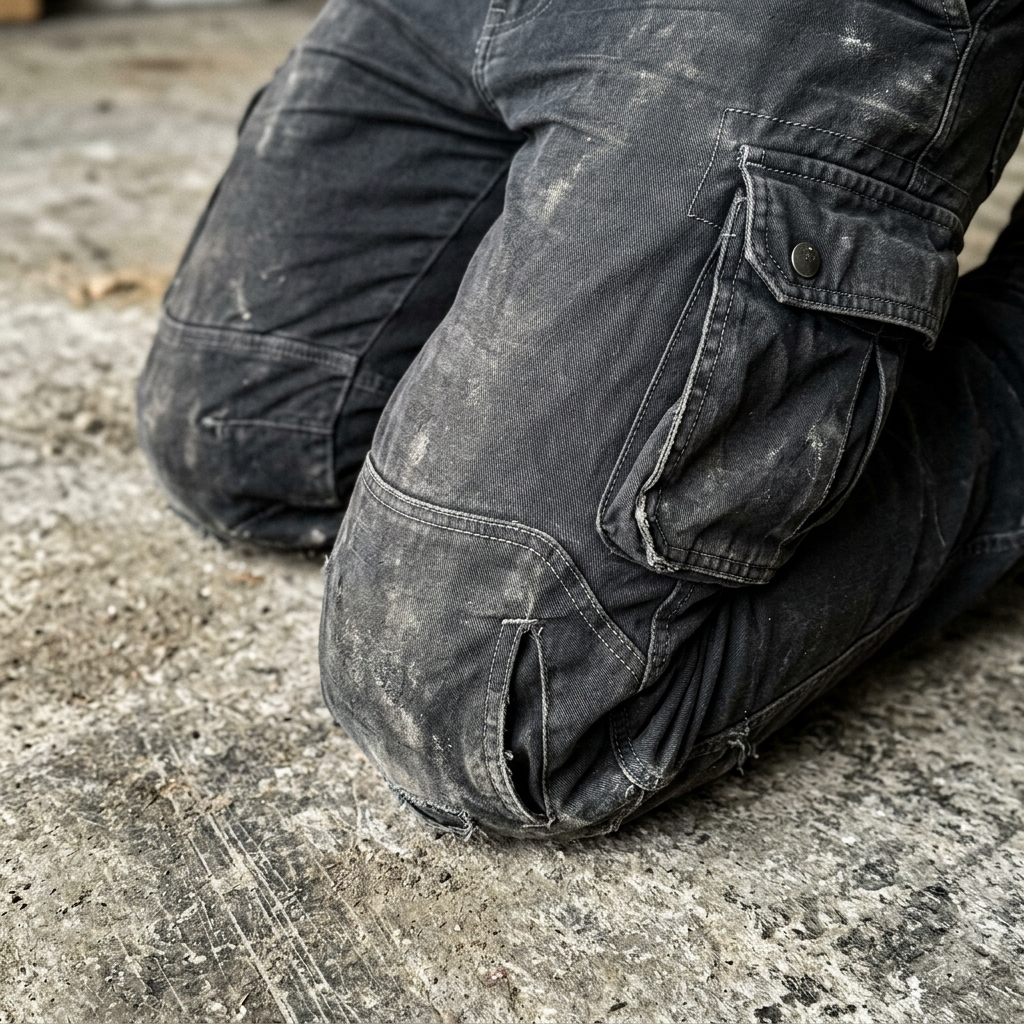
Stop renting a reputation
I don't buy the famous badge anymore. Not because I've gone tight — because I finally worked out what it was actually selling me. It was selling me the feeling of having spent enough. The trousers didn't last a day longer than the cheap ones; I just paid extra for the logo that told the site I'd bought serious. That's renting a reputation, and it split at the crotch like everything else.
If you're staring at another £120 pair telling yourself this time it'll last two years — it won't, because you're paying for the same badge that let you down last time. And if you're on the cheap rack telling yourself you're being sensible, do the sum: three pairs a year, forever, is the dearest trouser in the van. The way out of both traps is the same. Stop paying for the name. Start paying for the build.
How can £59 trousers be better than the £120 name-brand pair?
Because past a certain price, the extra money stops going into the fabric and stitching and starts going into the badge, the retail markup and the marketing. A £120 pair and a £59 pair can carry the same build quality — what makes one last is the gusset, four-way stretch and triple-zone reinforcement, not the logo. £59.99 is an introductory launch price (RRP £119.99); the build is what makes them last.
Isn't a cheap pair the sensible choice if they all die anyway?
That's the trap. If you replace a "cheap" pair three times a year, you're spending £150–£180 a year — the sticker price flatters it. A trouser that genuinely lasts the year, at £59.99, is the lower cost-per-wear even before the free knee pads and the Buy 2 Get 1 Free.
Why do even expensive work trousers blow out at the crotch?
Because a flat crotch seam takes all the load of every squat on one junction, and past a certain price the brands skip the fix (a gusset that spreads the load, plus four-way stretch) — the badge is cheaper to add than the build. That's why £120 pairs and £30 pairs fail the same way.
What's the Buy 2 Get 1 Free deal?
You get three pairs for the price of two — £119.98, working out at just £33 a pair — with free pro knee pads on every pair. A full week's rotation for less than one big-name pair.
Waterproof?
Water-repellent, not waterproof. A wet morning and site splash bead off; they're not a drysuit for a sustained downpour.
What if the size or fit is wrong?
30-day money-back, free pro knee pads included. Try them, do your own cost-per-wear maths, and send them back if they're not right.
This is an advertorial. Quotes marked as forum posts are real tradesman verbatims from public threads. Cost-per-year figures are illustrative, based on tradesmen's own reported rebuy rates. Water-repellent, not waterproof.